



When agents think about marketing a listing, an open house is often the first tactic that comes to mind. It is one of the oldest tools in real estate—but raises a fair question. Do open houses actually sell homes?
According to the Zillow Consumer Housing Trends Report, 65% of listings included between one and three open houses. This represents a roughly 20% increase compared to previous years. Clearly, open houses are not going anywhere. But popularity alone does not answer whether they are effective selling tools.
In this guide, we take a closer look at what the data says about open houses and home sales. We will explain how they work, weigh the advantages and limitations, and outline how you can help your seller prepare for one.
Do Open Houses Sell Homes? What the Data Says
Open houses can be an effective part of a listing strategy, though it is important to set accurate expectations. Only about 4% of open houses result in a sale. That number is not a reason to avoid them—it is simply a reason to understand what they are actually for.
Beyond the possibility of an offer, open houses serve several meaningful purposes for both the listing and the agent’s broader business. We will explore those advantages and outline why open houses remain a worthwhile tool even when an offer does not follow.
What Is an Open House in Real Estate?
An open house is a scheduled event, typically held on a weekend, where the public can tour a property without a private appointment. Multiple visitors move through the home, interact with the listing agent, and form their own impressions of the property.
For listings, the value is in the exposure. An open house reaches people who would not have scheduled a private showing on their own. For agents, it creates a natural environment to meet potential clients and expand their network. Ultimately, these benefits extend well beyond the listing itself.
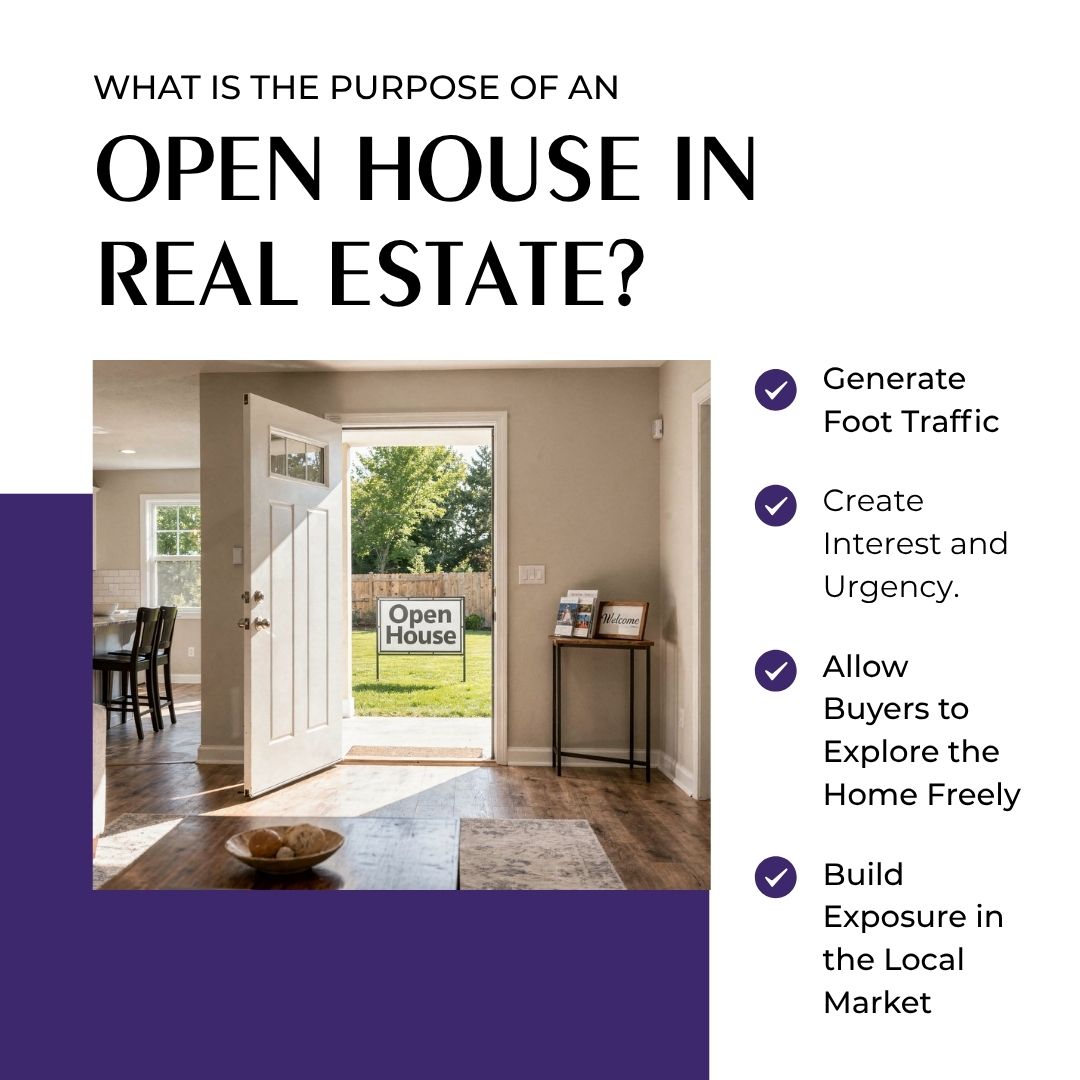
What Is the Purpose of an Open House in Real Estate?
Generate Foot Traffic
Open house signs throughout the neighborhood draw foot traffic from people who may never have come across the listing online. Drivers passing through, residents on a walk, and curious neighbors often stop in simply because a sign caught their attention.
That kind of organic exposure has real value. Some of those visitors will be serious buyers considering a move to the area. Others may be homeowners quietly wondering what their own property might be worth. All of these conversations can turn into future clients for real estate agents.
Create Interest and Urgency
There is a psychological dimension to open houses that works in the seller’s favor. When buyers see other interested people moving through the same property, it creates a sense of competition. That visibility triggers urgency, as buyers become aware that someone else may make an offer first. As a result, this can be enough motivation to push serious buyers off the fence and into action.
Allow Buyers to Explore the Home Freely
The open house environment is intentionally low-pressure. Visitors can move freely through the property without agent representation, allowing them to form genuine first impressions.
Additionally, for those who are serious, it often leads to a private showing or, in some cases, an offer the same day.
Build Exposure in the Local Market
A well-marketed open house builds meaningful exposure in the local market. Promoting the event online, through printed materials, and with strategically placed signage ensures the listing reaches the right people.
That visibility benefits the listing directly. It also creates a natural opportunity for you to connect with new prospects. These are people who may not be ready to buy today but are worth having in your pipeline.
How Do Open Houses Work in Real Estate?
A real estate agent advertises the open house.
Effective promotion is what separates a well-attended open house from one that falls flat. As the listing agent, that responsibility falls on you. Advertising the event across listing platforms and social media, combined with well-placed signage, gives the open house the visibility it needs.
Do you want a deeper look at marketing strategies for your listings and your broader business? Review our guides “Digital Marketing for Real Estate Agents” and “Social Media for Realtors.”
Potential buyers tour the property at their leisure.
On the day of the event, your role is to welcome visitors and create an environment where they can explore the property comfortably. The atmosphere should feel relaxed and unhurried. As buyers move through the home and form their impressions, you are available to answer questions—without hovering or applying pressure.
The agent collects the visitor’s contact information.
Collecting contact information from every visitor is the most important thing you can do during an open house. Knowing who attended, where they are in the buying process, and whether they are already represented gives you the foundation for meaningful follow-up.
Every name added to your CRM from an open house is a potential client. Over time, that pipeline builds into one of your most valuable business assets.
The real estate agent follows up with all visitors and agents.
Within 24 to 48 hours of the event, follow up with every visitor and agent who attended. A brief, personalized message that reinforces something from your conversation goes further than a generic email. It also creates a natural opportunity to ask for feedback on the property. This insight can help you refine your approach and move the listing more effectively.
The most productive agents automate this process so nothing slips through the cracks. For more on streamlining your business operations, review our guide “Technology for Real Estate Agents to Close More Deals.”
Pros and Cons of Open Houses for Selling a House
There are various pros and cons of open houses, each with unique selling points and key considerations. Below, we will thoroughly explore both, helping agents understand where this tool should fall in their business model.
Pros
More Visibility
Open houses create a level of visibility that a standard listing cannot achieve on its own. Buyers actively searching homes for sale online will find the property through the MSL. However, an open house reaches people who were not looking at all. Neighbors, passersby, and anyone who spots a sign are made aware of the listing in a way no digital advertisement can fully replicate.
Convenient for Buyers
Private showings require coordination between the buyer, their agent, and the seller. An open house removes that friction entirely. Buyers at any stage of the process can attend on their own, without needing to work around an agent’s schedule.
That accessibility brings more people through the door. This means you receive more opportunities to connect with prospects you may never have reached through a traditional showing.
Opportunity to Grab Attention
An open house attracts more than just buyers. Local homeowners who may have been quietly considering a sale take notice when a comparable property hits the market. When they see the attention an open house generates, it can be enough to prompt a conversation.
That conversation often starts with a simple question about what their own home might be worth. For agents focused on building their listing inventory, that is exactly the kind of opportunity worth cultivating.
Cons
Not Always Serious Buyers
Because open houses are open to the public, not every visitor will be a qualified or motivated buyer. That is simply the nature of the format. Rather than viewing this as a drawback, experienced agents treat every visitor as a potential addition to their pipeline. This is regardless of where they are in the buying process or whether they have any interest in the current listing.
Privacy Concerns
Some sellers feel uneasy about opening their home to the public—and that concern is reasonable. Having strangers walk through a personal space can feel uncomfortable, and the possibility of theft is a legitimate consideration.
There are practical steps that address these concerns directly. Sellers should remove or secure valuables and personal items before the event and confirm their homeowners’ insurance coverage in the event of an incident.
Moreover, a mandatory sign-in sheet ensures you have a record of everyone who entered the property. This is a simple measure that adds a meaningful layer of accountability.
Limited Direct Conversations
Open houses give buyers the freedom to explore at their own pace. However, that environment also limits the depth of one-on-one conversations. With multiple visitors moving through the property at the same time, the listing agent’s attention, naturally, must be divided. Those focused conversations that address a buyer’s concerns or create a connection that leads to a second showing are simply harder to have.
Are Open Houses Effective in Selling a House?
Open houses can contribute to a successful sale, but setting accurate expectations with your seller from the start is essential. Direct offers from open houses are uncommon—but 53% of buyers attend at least one open house during their home search. That alone speaks to their continued relevance in the process.
The value of an open house is rarely measured by offers received that day. It lies in the awareness it generates, the showing requests that follow, and the relationships an agent builds with those who walk through the door. For listing agents focused on growing their local presence, a well-executed open house is one of the most effective tools available.
For more on what typically follows an open house, read our guide “How Long After an Open House Do Offers Come In?”
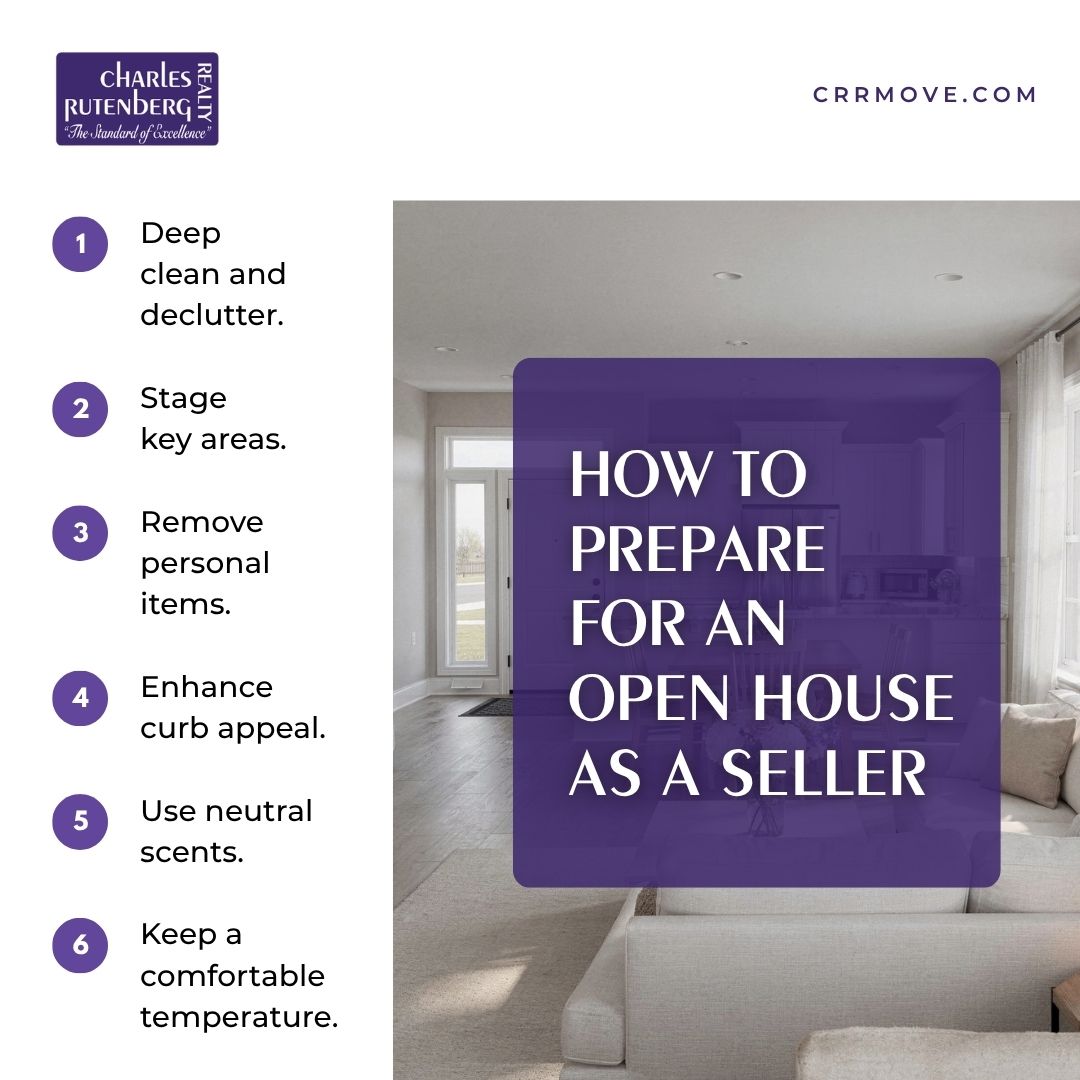
How to Prepare for an Open House as a Seller
Deep clean and declutter.
Before anything else, sellers should deep clean and declutter the home. Every surface, corner, and detail should be spotless before the first visitor arrives. A clean home signals care and maintenance to buyers. As a result, that impression forms quickly and is difficult to reverse.
Stage key areas.
Staging can significantly improve the outcome of an open house. Agents consistently report that well-staged homes attract stronger offers above asking price. Focusing staging efforts on the rooms that carry the most weight with buyers, such as the primary bedroom, living room, kitchen, and dining room, tends to produce the greatest impact.
For practical ideas and examples, review our guide “Staging Ideas for Selling a Home That Bring Better Offers.”
Remove personal items.
Removing personal items—photographs, souvenirs, and anything that reflects the seller’s lifestyle—serves two purposes. First, it protects the seller’s privacy and creates a neutral environment. Additionally, buyers can then picture themselves in the space rather than feeling like guests in someone else’s home during the open house.
Enhance curb appeal.
Buyers form impressions before they even step inside an open house. According to industry data, 68% of homebuyers consider poor curb appeal a dealbreaker. This means the home’s exterior deserves just as much attention as its interior.
Encourage sellers to invest in basic landscaping, a fresh coat of paint on the front door, and a new welcome mat. These small acts can elevate the property’s first impression and perceived value.
Use neutral scents.
The experience of an open house extends beyond what buyers see. Scent, in particular, has a measurable effect on how people perceive a space. Industry research suggests that subtle scents—citrus, vanilla, and fresh florals—can help buyers feel more at ease and focused on the property.
Advising sellers to use essential oil diffusers or plug-in scents before the event is a small, low-cost step that can contribute to the overall experience. It is the kind of detail most agents overlook, which is exactly why it is worth paying attention to.
Keep a comfortable temperature.
Comfort matters during an open house, and temperature plays a larger role than most agents consider. A home set between 68°F and 72°F feels immediately welcoming. Too warm or too cold, and visitors become distracted rather than focused on the property.
Ask the seller to set the thermostat the day before. This ensures the environment is consistent and ready well before the first visitor arrives. Never underestimate the importance of a comfortable temperature when hosting open houses in Orlando.
Open houses can be a powerful way to generate leads and build local visibility in your real estate business.
Open houses may not always result in a direct sale, but they remain one of the most effective marketing tools available to listing agents. In a market like Orlando, a well-executed open house can establish your presence and position you as a trusted local resource.
At Charles Rutenberg Realty Orlando, our agents have the support and resources to make the most of every listing opportunity. Moreover, with our 100% commission model, you keep everything you earn. No brokerage splits, ever. That means more to reinvest in your business and your growth.
Complete our online form to connect with our broker and discuss what your future at Charles Rutenberg Realty could look like.