



A career in real estate offers unlimited income potential. However, how agents actually get paid is one of the most consistently misunderstood aspects of the profession. Agents work on commission, meaning the transactions they close determine their income.
For high performers, that structure creates significant upside. For those entering without a clear understanding of how real estate commissions work, it can lead to early surprises. Before committing to a real estate career, understanding the commission structure in detail is essential.
In this guide, we explain how real estate commissions work and who pays them. We also cover how commissions are divided and how agents can position themselves to negotiate effectively. By the end, you will understand how agents earn income and what that means for your career decision.

How Does Real Estate Commission Work for Florida Agents?
A thorough understanding of how commission works is more than a technical detail agents need to know. It is a client-facing advantage. Agents who can clearly and confidently explain the structure to buyers and sellers are better positioned to present their value. Additionally, they can address objections and justify their fees with context rather than defensiveness.
Additionally, we will also discuss the importance of choosing a brokerage model that supports your long-term earning potential. This begins with understanding the foundation: what real estate commission is, how brokerages structure it, and where those earnings actually come from.
What Is Real Estate Commission?
Real estate commission is a percentage of the total purchase price. The listing agent and buyer’s agent typically divide it between them. In traditional transactions, the seller pays the total commission from the proceeds of the sale. However, this structure changed following a recent ruling by the National Association of Realtors. There is now an option to place responsibility for the buyer’s agent commission on the buyer instead.
The key principle is that all parties agree on commission rates and arrangements before a transaction moves forward. More specifically, if a seller chooses not to pay the buyer’s agent’s commission, both parties agree to this before buyers submit offers.
What Is the Typical Commission for a Real Estate Agent?
The average real estate agent commission rate in Florida is 5.53% of the total purchase price. When the home seller pays, the listing and buyer’s agents split the payment. Each side takes away approximately 2.76% to their brokerages.
It is important to understand that commission rates are fully negotiable between the seller and listing agent. Factors such as market conditions, property type, and pricing strategy can all influence the agreed-upon rate.
How Do Real Estate Commissions Work?
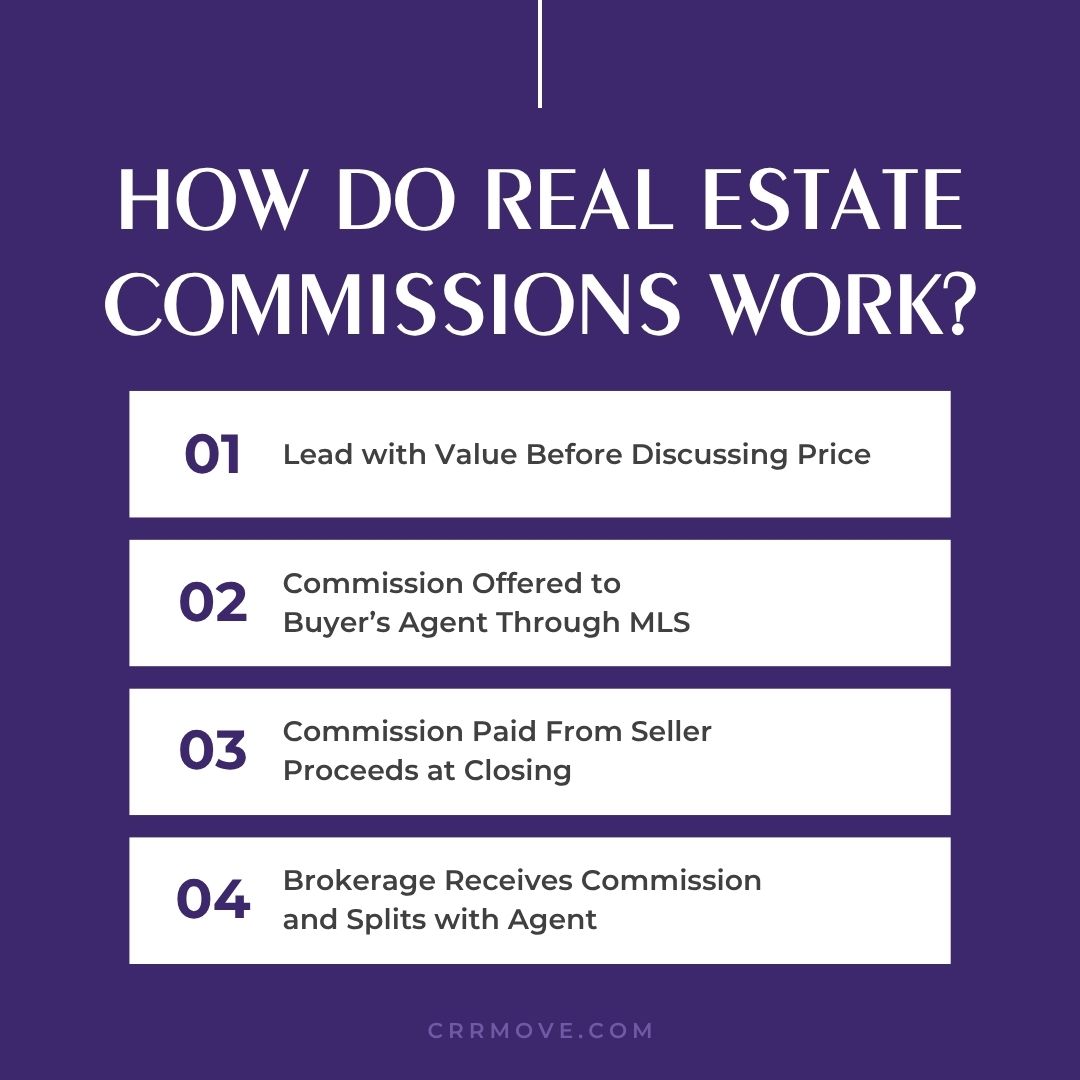
Listing Agreement Sets Total Commission
Before listing a property, the agent and seller must agree on a commission rate and structure and put it in a written agreement. At this point, the seller decides whether to cover the full commission, including the buyer’s agent. Alternatively, they can offer compensation only to the listing agent.
Limiting or eliminating the buyer’s agent commission can reduce the seller’s cost. However, it may also narrow the buyer pool. Many buyers are unwilling or unprepared to cover their agent’s fee directly, which can extend the time the property sits on the market.
When working through this decision with a seller, presenting both sides clearly and honestly is part of your value. Sellers who understand the trade-offs make more informed decisions. They also recognize when their agent is working in their best interest rather than simply moving the process forward.
Commission Offered to Buyer’s Agent Through MLS
Once the listing is active on the multiple listing service (MLS), it clearly states the commission rate offered to the buyer’s agent. This transparency eliminates ambiguity around compensation expectations before submitting any offer. It also protects all parties and keeps transactions moving without unnecessary friction.
Commission Paid From Seller Proceeds at Closing
The closing process deducts the agreed-upon commission directly from the seller’s proceeds. It is then distributed to the brokerages representing both sides of the transaction. Remember, this amount is a percentage of the home’s final purchase price.
To better understand cost distribution during the closing process, review our guide, “Costs Associated with Buying a Home.”
Brokerage Receives Commission and Splits with Agent
A common misconception is that agents pocket their full commission directly after closing. In practice, the commission goes to the listing and buyer brokers. They then distribute the agent’s portion in accordance with their agreement. At traditional brokerages, that typically means a commission split in which the brokerage retains 30% to 50% of the agent’s commission. The agent keeps the remainder.
Some brokerages operate differently. At Charles Rutenberg Realty Orlando, agents work under a 100% commission model. This means there are no percentage-based splits. Instead, we simply deduct flat fees covering administrative costs and E&O insurance. The rest goes directly to the agent.
Use our Commission Calculator to see exactly how much you can earn when you work with Charles Rutenberg Realty.
Who Pays the Real Estate Commission?
Traditionally, the client selling a home pays the full real estate commission. This seller-paid commission is deducted from their proceeds at closing and distributed to the representing brokerages on both sides of the transaction.
As noted, this structure can vary depending on what the seller agrees to with the listing agent. If the seller chooses not to cover the buyer’s agent compensation, the buyer becomes responsible. The buyer and their agent must then negotiate a separate arrangement between them. While this structure is now allowed, it remains uncommon in practice.
How to Negotiate Real Estate Commission
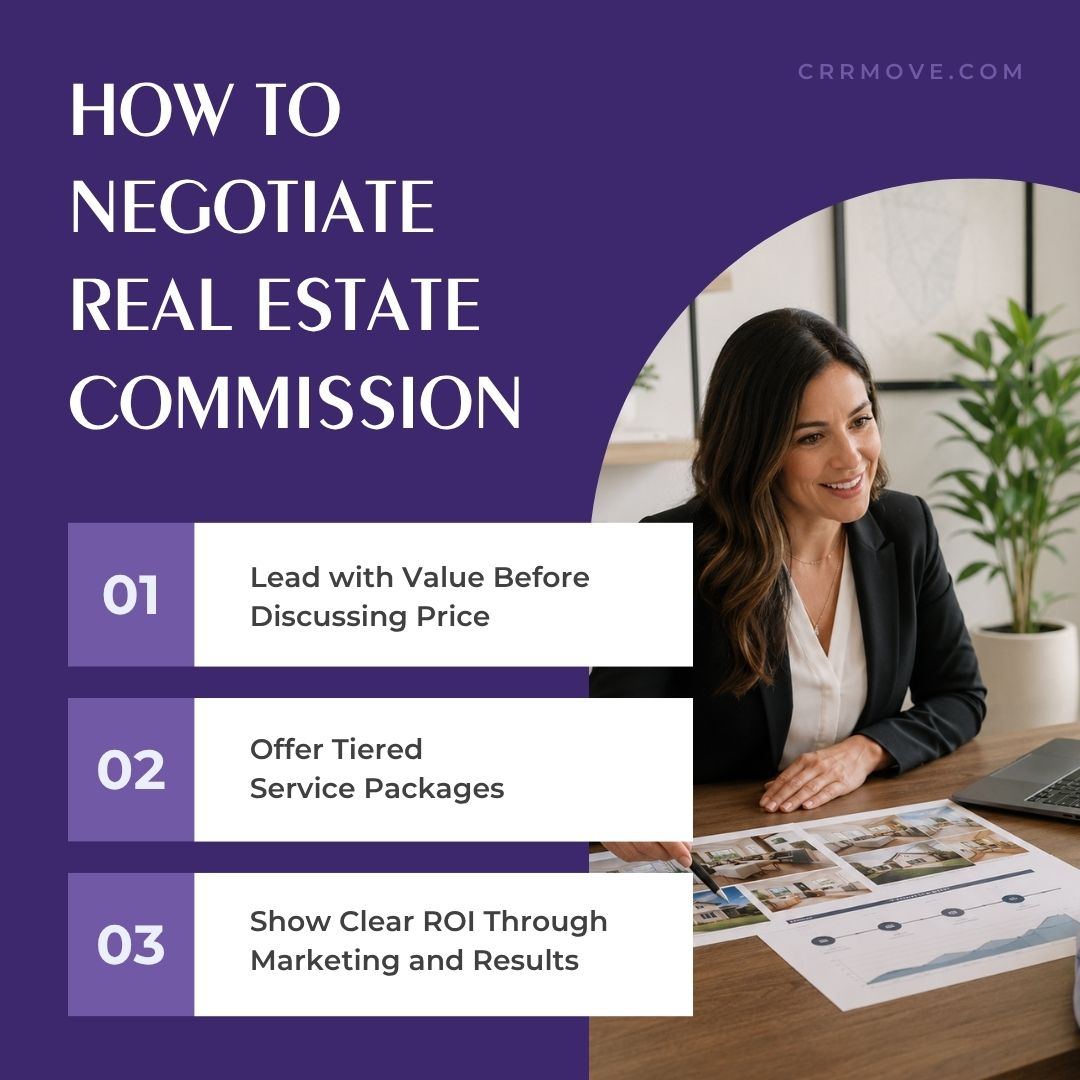
Lead with Value Before Discussing Price
Before the conversation turns to commission, make sure the seller understands exactly what they are getting. Highlight what you cover throughout the transaction that most other agents treat as an afterthought. More specifically, walk them through your marketing plan, pricing strategy, and negotiation tactics to get them the best offer.
Specifics build credibility. Share your average days on market in their neighborhood, and explain how you gather and use showing feedback. Outline your photography and staging process, and describe how you approach offer negotiations. When the conversation is grounded in concrete deliverables, commission becomes a question of what those deliverables are worth. The negotiation shifts entirely.
If you want to boost the success of your listings, read our guide “Tips for Selling a Home” to build value and experience.
Offer Tiered Service Packages
Presenting more than one commission option shifts the dynamic of the conversation. Rather than the seller pushing back on a single rate, they are choosing between service levels that reflect their needs and budget.
A premium package might include professional staging, drone photography, paid social campaigns, and expanded print exposure. A standard package covers the essentials.
This approach gives the seller a degree of agency in the decision while making the value of each tier visible and concrete. It also protects your time. Heavier marketing investment is not always warranted, and a tiered structure allows you to allocate resources accordingly.
Show Clear ROI Through Marketing and Results
Sellers respond to evidence more than anything else. Come prepared with comparable sales you have handled. Highlight those where your pricing or marketing produced results above neighborhood averages. If recent listings sold above the asking price, moved faster, or attracted multiple offers, share those numbers. Data speaks more effectively than any conversation.
Additionally, be ready to walk sellers through where the marketing investment goes and what each component aims to accomplish. When sellers can draw a clear line between what you do and what they net at closing, the commission conversation shifts. Instead of focusing on cost, it becomes a return-on-investment discussion—and that is a much easier conversation to have.
For a deeper look into how agents use marketing for listings, review our guide “Digital Marketing for Real Estate Agents.”
Keep 100% of your real estate commission with Charles Rutenberg Realty.
Real estate agents are paid through a commission-based structure, which means there is no ceiling on what they can earn. Every transaction you close contributes directly to your income, and higher-value properties naturally produce stronger returns. The more transactions you complete and the higher the price points, the more your earning potential grows.
At Charles Rutenberg Realty, that potential goes further. Our 100% commission model means no percentage-based splits—just flat transaction fees. Everything else stays with you, giving you more to reinvest in your business and more capacity to grow.
Are you ready to see what your earning potential looks like with Charles Rutenberg Realty? Schedule a call with our broker today.