



Real estate is a significant investment. For many buyers, purchasing a home is the largest financial decision they will ever make. But what if you could help your clients begin their homeownership journey at a more favorable price point?
An increasing number of real estate agents are guiding clients toward purchasing a property at auction. These auctions allow buyers and investors to buy a house at below-market prices, which can provide a strong position for building equity. As a result, it may make homeownership more accessible—even in uncertain economic conditions.
In this guide, we will explain how the home auctions work so you can support your clients from start to finish. We will also review how to prepare buyers and discuss the potential advantages and risks of purchasing auction properties.

How to Buy Auction Homes: What Every Agent Should Understand
Traditionally, real estate agents focus on properties listed on the MLS by other agents. However, a growing number of professionals are expanding their services to include auction properties. In fact, nearly half of the interest in purchasing a house at auction originates from buyer’s agents. This highlights the increasing role agents play in this segment of the market.
Auction sales can offer valuable opportunities for both buyers seeking a primary residence and investors seeking strategic purchases. To serve clients effectively, it is important to understand the auction process, including registration requirements, bidding procedures, and timelines. This knowledge allows you to guide clients confidently through what can be a fast-paced and competitive transaction.
What Are Auction Homes?
Auctioned homes are properties sold through a public bidding process rather than through traditional real estate listings. These properties may include expired listings, bank-owned foreclosures, or homes from private sellers who need to complete the sale quickly.
One of the primary advantages of auctions is speed. While traditional home purchases can take several months to finalize, auction transactions are often completed much faster. In many cases, ownership can transfer in as little as 28 days after the winning bid is accepted.
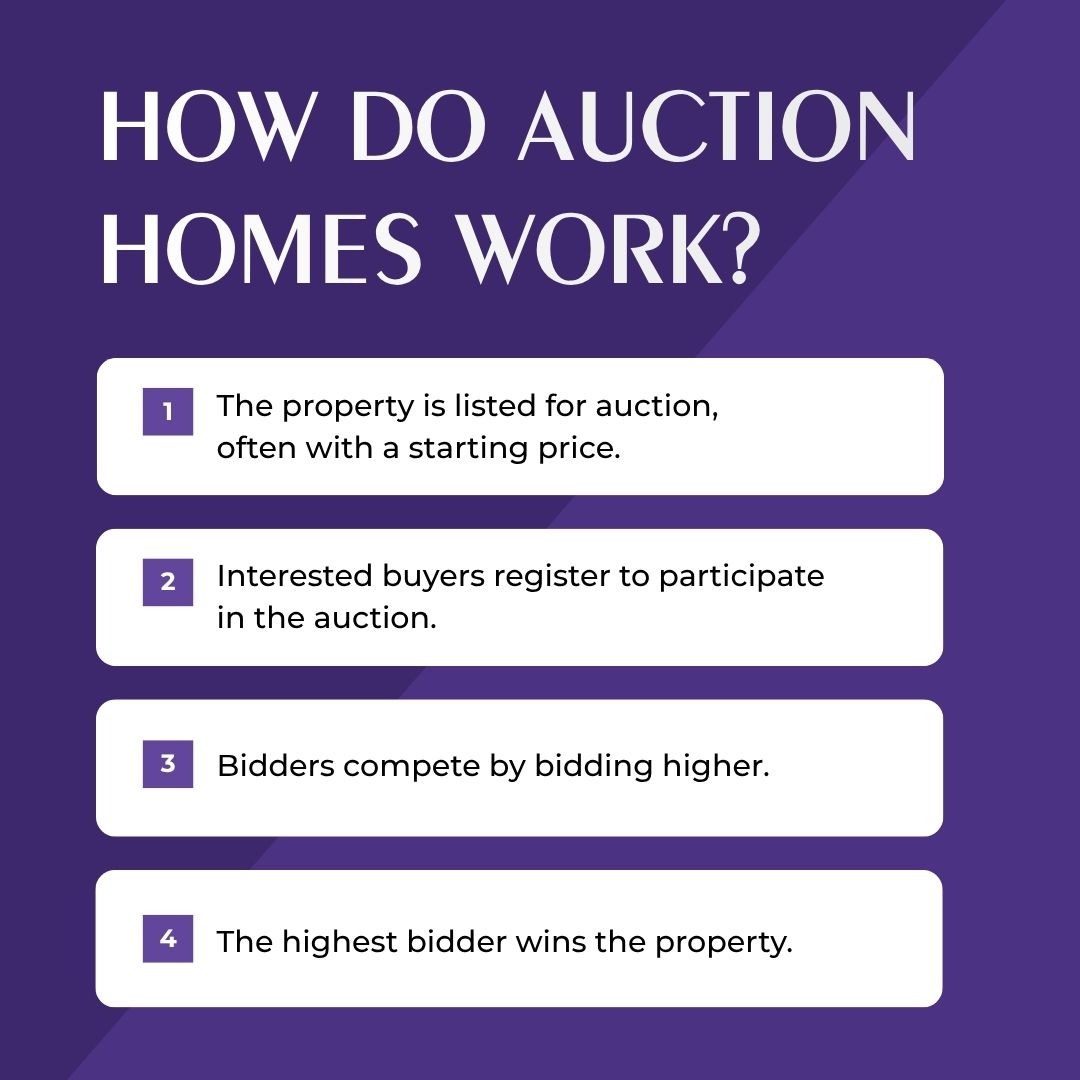
How Do Auction Homes Work?
There are several types of auctions that homebuyers and investors may encounter. Understanding the differences can help you guide clients toward the option that best aligns with their goals and risk tolerance.
Common types of real estate auctions include:
- Reserve Auctions: The highest bid serves as an offer, and the seller typically has up to 72 hours after the auction ends to accept or reject the bid.
- Absolute Auctions: The property sells to the highest bidder, regardless of the final price. This structure guarantees the sale upon the conclusion of bidding.
- Minimum Bid Auctions: The property is listed with a predetermined minimum price, giving buyers clear expectations about the entry point for bidding.
Equally important is understanding the full auction process, which is what we will discuss below.
The property is listed for auction, often with a starting price.
One of the most common auction formats is the minimum bid auction. In this type of sale, the auction company publishes the property with a clearly defined starting price. This gives buyers a transparent entry point and helps set expectations before bidding.
From there, potential buyers and investors can review available auction properties and conduct their research. They will determine which homes align with their budget and investment goals before placing a bid.
Interested buyers register to participate in the auction.
To participate, auctions require buyers to complete a registration process. This step typically includes a non-refundable registration fee, which usually ranges from $25 to $100. Generally, buyers must register at least 24 to 48 hours before the auction begins.
It is also important that they have funds readily available for an immediate deposit if their bid is accepted. Preparing clients for these requirements helps ensure they can participate confidently and avoid delays during the auction process.
Bidders compete by bidding higher.
During the auction, buyers place incremental bids as they compete to reach the highest offer. It is important to remain calm, disciplined, and focused on a predetermined budget rather than reacting emotionally in the moment.
In many cases, bidding moves quickly. Depending on the structure, the highest bidder is often awarded the property within just minutes. Setting a clear strategy with your clients in advance can help them make confident decisions and avoid overpaying.
The highest bidder wins the property.
While the highest bidder is often the one who receives an auctioned home, the outcome can vary depending on the auction structure. For example, in a reserve auction, the seller retains the right to accept or reject the highest bid. In contrast, an absolute auction has no minimum price requirement, and the property sells to the highest bidder.
After winning the auction, the buyer must submit an immediate deposit—often around 10% of the purchase price. The remaining balance is typically due within 24 to 48 hours, and many buyers pay with certified funds, such as a cashier’s check.
Benefits of Buying a Home at an Auction
There is a reason many buyers and investors increasingly prefer to buy a home at auction. This approach can offer meaningful financial advantages and, in some cases, provide a more accessible entry point to homeownership. When properly prepared, buyers may benefit from opportunities that are not always available through traditional home listings.
Some of the key advantages of buying a home at auction include:
- Below-Market Purchase Prices: Properties sold at auction are often priced lower than comparable homes on the traditional market.
- Faster Closing Timeline: Auction transactions typically move much more quickly than standard real estate purchases. In many cases, closings occur within 7 to 30 days.
- Potentially Less Competition from Traditional Buyers: Some buyers hesitate to participate in auctions due to financial requirements or perceived risks. As a result, there may be fewer competitors in certain situations.
- Transparent Buying Process: Auctions follow a clear and structured format, reducing uncertainty and eliminating prolonged back-and-forth negotiations.
- Access to Unique or Distressed Properties: Auction platforms often feature foreclosures, estate sales, or government-owned properties that may not receive widespread marketing exposure. These listings can present valuable opportunities for buyers seeking renovation projects, investment properties, or homes in desirable locations.
Risks of Buying a Home at Auction
When purchasing a home at auction, it is important to educate clients about the potential risks involved. While auctions can offer clear advantages, buyers should fully understand the challenges before committing to a purchase. Providing balanced guidance helps clients make informed decisions and protects your professional credibility.
Common risks of buying a home at auction include:
- Limited or No Property Inspection: Many auction properties are sold “as-is,” and buyers may not have the opportunity to complete a full inspection beforehand.
- Strict Payment Requirements and Limited Financing Options: Auctions often require proof of funds or a substantial deposit immediately upon winning the bid. The balance is typically due within 24 hours to 30 days. If financing is delayed or denied, the buyer may risk losing their deposit.
- Outstanding Liens or Legal Obligations: Some auction properties may have unpaid taxes, liens, or legal claims attached to the title. The buyer could become responsible for resolving these obligations, which can add significant costs to the transaction.
- Emotional Bidding and Overpaying: The fast-paced nature of auctions can lead buyers to make decisions based on emotion rather than data. Without a clear budget and understanding of market value, there is a risk of overpaying for the property.
- Occupancy Challenges: In some cases, the property may still be occupied by tenants or previous owners after the sale. Resolving occupancy issues may require legal action, additional expenses, and time.
Are Home Auctions Worth It?
Purchasing a home at auction can be highly rewarding for buyers who understand the risks and conduct thorough research. When approached strategically, auctions can present valuable opportunities that are not always available through traditional home purchases.
However, auction properties are not the right fit for every buyer. That is why your role as a real estate professional is so important. You are responsible for explaining the benefits, potential risks, and practical realities of the auction process. This allows you to help clients make informed decisions and protect their financial interests.

How to Buy Homes at Auction
Research upcoming auctions in your area.
There may be several auction houses in your area hosting real estate auctions throughout the year. Setting up alerts for upcoming auctions keeps you informed and allows you to promptly share relevant opportunities with your buyers.
To learn more about automating these notifications, review our guide “Technology for Real Estate Agents to Close More Deals.”
Review property listings and auction terms.
Encourage buyers to carefully review the properties scheduled for auction, along with the specific terms and conditions. Understanding these details in advance helps prevent surprises and allows buyers to make confident decisions.
You can add significant value by pre-screening properties that align with your client’s criteria. Share properties that include the number of bedrooms and bathrooms, preferred location, and key features your client wants.
Inspect the property if allowed.
In certain situations, buyers may have the opportunity to inspect a property before it goes to auction. These inspections are typically allowed within a limited access window, similar to an open house. Additionally, buyers may be required to register in advance or sign liability waivers before entering the property.
However, inspections are not always permitted. This is particularly true for sheriff sales, tax lien properties, occupied homes, or listings explicitly designated to be sold “as-is.” Setting this expectation early helps buyers understand the level of risk involved.
Check for outstanding liens or unpaid taxes.
Before participating in an auction, buyers and their agent should complete thorough due diligence on the property. This process typically includes reviewing property records and permits, analyzing comparable sales, estimating potential renovation costs, and ordering a title search.
Taking these steps helps reduce risk and provides a clearer understanding of the true cost of ownership. It also allows buyers to identify any outstanding liens or legal obligations before committing to the purchase.
Secure financing or prepare cash funds to purchase.
Traditionally, buyers will finance home purchases through a mortgage lender. However, auctions require faster access to funds, which means buyers must consider alternative financing options. Common methods of purchasing a home at auction include cash, hard money loans, home equity loans, and bridge loans.
It is essential for buyers to secure financing or have cash funds readily available before attending the auction. If they submit the winning bid, they must make an immediate deposit and complete the remaining payment promptly. Without confirmed funds, buyers risk losing both their deposit and the property.
Register for the auction and submit required deposits.
Auctions require participants to register in advance before they can successfully place bids. This registration process typically includes a non-refundable fee, and in some cases, a refundable deposit. The exact requirements vary by auction provider and property type.
Set a maximum bid limit before bidding.
Before attending an auction, work closely with your client to establish a clear maximum bid limit. Begin by reviewing comparable property sales and evaluating current market conditions to determine the property’s fair market value. Then, factor in the client’s financial position, including available funds, renovation costs, and risk tolerance.
Using this data-driven approach allows you to set a realistic bidding ceiling and helps prevent emotional decisions during the auction.
Participate in the auction by placing bids.
During the auction, your clients will place bids on the property while competing against other interested buyers. The process is typically fast-paced, with many auction sales concluding in as little as 15 minutes.
Complete the payment within the required timeframe if you win.
If your client submits the highest bid and wins the auction, they must provide the initial deposit immediately. This is typically in the form of cash or a cashier’s check. Shortly after, the remaining balance must be paid within the timeframe specified by the auction terms. Meeting these deadlines is essential to finalizing the purchase and securing ownership.
Are Home Auctions Cheaper?
Many buyers are often able to purchase auctioned homes at a lower price than they can for traditional listings. The typical discount homebuyers receive is 7.9%, while 1 in 4 buyers receive a discount of 10% or more. However, final pricing depends on several factors, including the property’s location, condition, local market demand, and the level of competition among bidders.
To set realistic expectations, it is helpful to understand that the final sale price of an auction property is often significantly higher than the opening or minimum bid. On average, auctioned homes sell for approximately 36% above the initial bid. However, this increase can still keep the sale price below the property’s market value.
Help homebuyers and investors purchase auctioned homes and keep 100% of your commission with Charles Rutenberg Realty.
Real estate professionals have many opportunities to help clients achieve homeownership. You can guide buyers through a traditional purchase or assist them in acquiring property at auction. However, understanding the advantages and risks of each approach is essential. With the right knowledge and preparation, you can confidently prepare clients to purchase a home at auction.
And when you work with Charles Rutenberg Realty Orlando, you keep even more of what you earn with our 100% commission model, even when you facilitate auction sales. Additionally, you’ll receive unparalleled professional support and resources to grow your real estate business.
Schedule a call with our broker to discuss what a career at Charles Rutenberg Realty can look like for you.