



Many people assume that a real estate agent’s primary role is guiding buyers and sellers through property transactions. While that is the sector of the work, a significant portion of an agent’s time is spent elsewhere. More specifically, many agents spend a considerable amount of time on something equally important: finding clients. In reality, your lead pipeline is the foundation of your business. Without it, the transactional side has nothing to work with.
For new agents and even some experienced ones, generating high-quality leads consistently is one of the most demanding aspects of the career. Fortunately, there are proven methods for finding leads and evaluating their quality before they enter your pipeline. Ultimately, the more deliberately you approach real estate lead generation, the more your business grows.
In this guide, we cover how to get leads as a real estate agent. We will explain what makes a lead worth pursuing, which generation methods produce the best results, and where to find leads. By the end, you will have the foundation to build a lead generation and marketing strategy to produce a steady stream of clients.

How to Get Leads as a Real Estate Agent
Building a sustainable real estate business requires a lead generation strategy that consistently brings new clients into your pipeline. Agents who rely solely on referrals and their existing sphere of influence can create an inconsistent stream. Over time, it can lead to a business that plateaus rather than grows.
When you understand the most effective methods for meeting new people and following up with intention, your trajectory changes. More importantly, the business itself changes considerably. Consistent lead generation is what separates agents who build momentum from those who stay stuck waiting for the phone to ring.
What Are Leads in Real Estate?
A lead in real estate is a potential client who expresses some level of interest in buying, selling, or investing in property. They come from a wide range of sources, including referrals, online inquiries, open houses, and social media.
However, not all leads carry equal value. Buyer leads are common and worth pursuing, but seller leads are widely considered the higher-value opportunity. A seller listing creates inventory, generates commission on the sale, and often produces buyer leads from the same transaction. That dual-sided potential means a single strong seller relationship can be worth considerably more to your business than a standalone buyer inquiry.

What Makes High-Quality Real Estate Leads?
Motivation to Move
High-quality leads share one defining characteristic: motivation. Whether driven by a major life event, a job relocation, or a downsizing decision, motivated leads have a real reason to move forward. That urgency is what separates a prospect worth prioritizing from one who may stay in your pipeline indefinitely without converting.
Timeline to Buy or Sell
As a real estate agent, you will encounter prospects at every stage of the buying and selling process. Some will be actively searching for a home right now, while others are thinking about selling but not planning to move for several years. Both are worth adding to your pipeline. However, the longer the timeline, the more consistent nurturing that relationship will require before it converts into a transaction.
Financial Readiness
Financial readiness is one of the clearest indicators of lead quality on the buyer side. A buyer who is pre-qualified for a mortgage is in a position to move quickly and is worth prioritizing accordingly.
In contrast, a buyer who has not yet spoken to a lender may sit in your pipeline for months or years. These leads are worth keeping in contact with over time. However, the agents who focus their immediate attention on financially prepared buyers see faster, more consistent results.
Level of Engagement
Engagement is one of the clearest signals of intent a lead can send. When a prospect takes the time to respond, ask follow-up questions, or stay in contact, they’re demonstrating a level of interest that’s worth paying attention to.
In general, the more touchpoints a prospect initiates on their own, the more likely they are to convert into a client. Chasing low-engagement leads, on the other hand, consumes time and energy that would be better directed toward leads who are genuinely ready to proceed.
Local Market Fit
A lead with interest in the specific market where you operate is inherently more valuable than one outside your area of expertise. When a prospect is looking to buy or sell in a market you know well, you move faster. You can also price more accurately and guide them more confidently. That local alignment benefits the client and strengthens your ability to deliver results consistently.
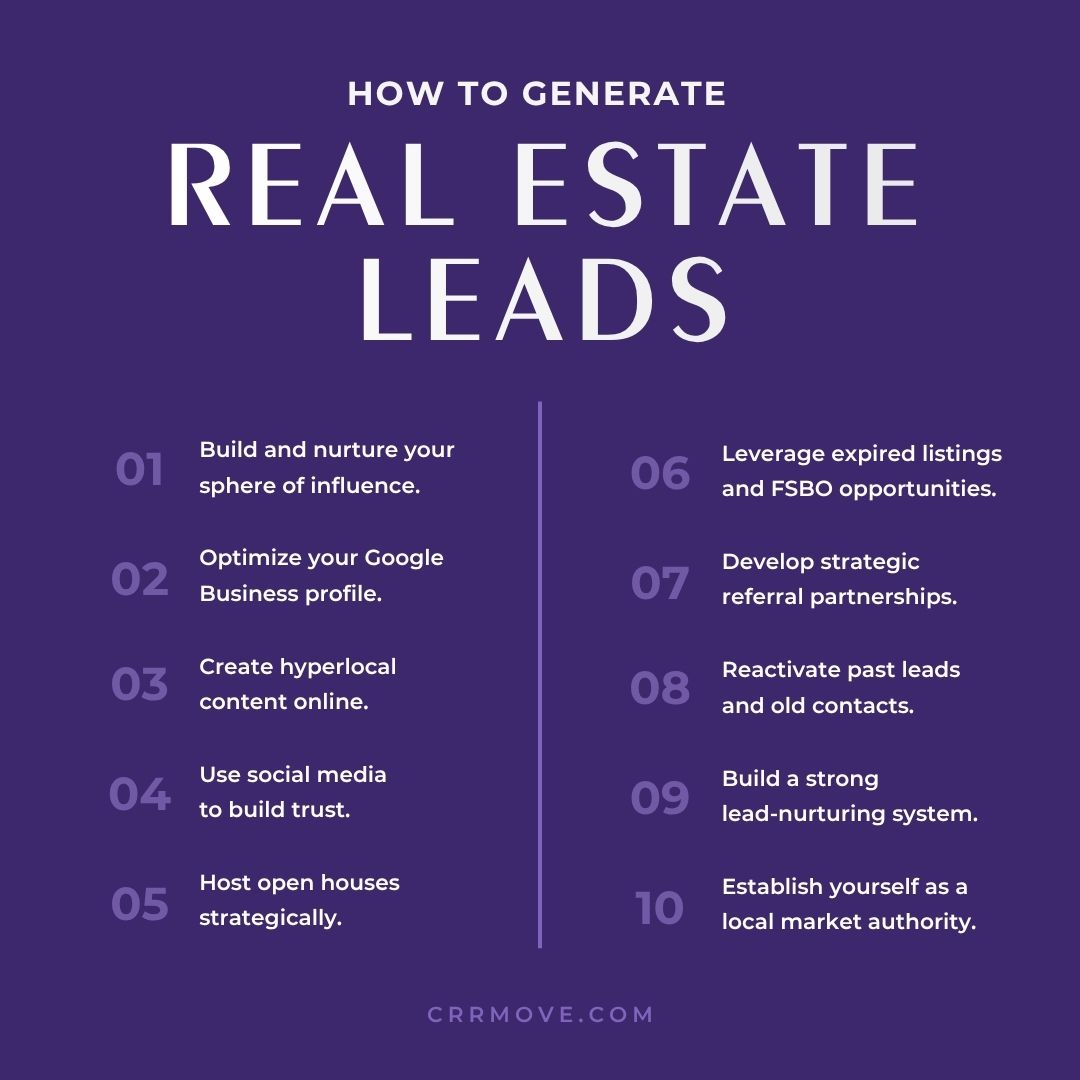
How to Generate Real Estate Leads
Build and nurture your sphere of influence.
The moment you get your real estate license, let the people in your life know. Your sphere of influence—friends, family, former colleagues, and acquaintances—is one of the most underutilized assets a new agent has. Staying in regular contact with these people, sharing market updates, and maintaining those relationships helps you stay top of mind. Eventually, when someone in your network decides to buy or sell, you are the first agent they think of.
Optimize your Google Business Profile.
Creating and optimizing a Google Business Profile is an accessible and effective way to generate leads online. A well-maintained profile increases your visibility in local search results and attracts buyers and sellers looking for an agent. It also adds a layer of credibility that a website alone cannot replicate.
To get the most out of your profile, make sure you include your contact information, business hours, website link, and service areas. Additionally, upload a professional headshot to build trust and authority. Ultimately, this is also where previous clients will leave testimonials to further enhance your reputation and credibility.
Create hyperlocal content online.
Publishing consistent, locally focused content online is one of the most effective ways to build a reputation in your market. Market updates, neighborhood profiles, and community event coverage all demonstrate local knowledge. For buyers or sellers actively researching an area, that kind of content positions you as a credible resource before they ever contact you.
Dive deeper into what it takes to serve a specific market in our guide, “How to Become a Local Real Estate Expert.”
Use social media to build trust.
Social media is a powerful lead generation tool for real estate agents. With 96% of homebuyers turning to online sources to research listings and agents, a professional social media presence is essential. More specifically, it puts you in front of the people you are actively trying to reach.
Beyond visibility, well-crafted content demonstrates your expertise and local knowledge, building trust before a prospect ever reaches out. For a detailed look at how to use social platforms professionally, review our guide, “Social Media for Realtors.”
Host open houses strategically.
Open houses are an effective tool for agents who are new to the industry or local market. Visitors who attend an open house are already engaged in the buying process. In fact, many of them will need to sell before or after purchasing. That combination makes every open house an opportunity to add qualified leads to your pipeline on both sides of the transaction.
Beyond promoting the current listing, the lead generation potential of a well-run open house is often where the real value lies. For a closer look at the reality of open houses, read our guide, “What Percentage of Homes Sell from an Open House?”
Leverage expired listings and FSBO opportunities.
Expired listings and for-sale-by-owner (FSBO) properties are two of the most overlooked lead sources in real estate. Homeowners in both situations have already demonstrated a clear intent to sell. They simply have not yet found the right path forward. Approach them with a well-prepared marketing plan and a clear explanation of your strategy. That alone is often enough to secure the listing.
If you want to prioritize listings in your business, review our guide, “How to Get Listings as a Real Estate Agent.”
Develop strategic referral partnerships.
Running a successful real estate business requires more than client-facing skills. It requires a network of strategic professional relationships. Partnering with mortgage lenders, estate and probate attorneys, financial advisors, and relocation specialists creates a reliable source of high-quality referrals.
In return, you send your own clients their way when the need arises. When you build these relationships on mutual trust and consistent follow-through, they become a dependable lead source for your business.
Reactivate past leads and old contacts.
As your network grows, it is natural to lose touch with certain contacts over time. Re-engaging those relationships with a genuine, low-pressure outreach can bring dormant leads back into your pipeline. The keyword, however, is “genuine”—a coffee invitation, a birthday message, or a quick note about a recent sale in their neighborhood.
Your outreach should feel personal rather than transactional. You’ll find that people are much more likely to respond to an outreach strategy that indicates you were thinking of them specifically—not just working through a contact list.
Build a strong lead-nurturing system.
Lead generation is where the process begins, but converting prospects into clients requires consistent nurturing over time. The most effective agents understand that successful follow-up is about staying visible and providing value throughout the decision-making process. How do they achieve this? They use structured follow-up systems tailored to where each lead is in the process.
Timing matters more than most agents realize in lead generation. Research shows that contacting a lead within 5 minutes of their initial inquiry makes them 21 times more likely to qualify. For some perspective, the average agent takes more than 15 hours to respond to a lead who contacted them online.
That kind of responsiveness is difficult to maintain manually, which is why automated nurturing systems are worth implementing early in your business. For a closer look at the tools that can help, review our guide, “Technology for Real Estate Agents.”
Establish yourself as a local market authority.
Consistent digital marketing, active networking, well-run open houses, and strategic local partnerships all contribute to the same outcome. You establish yourself as a recognized authority in the market.
When you share expert knowledge and relevant market insights across these channels, recognition builds. You become the agent people think of when they are ready to move. Buyers and sellers want to work with someone who clearly knows the market and can guide them through the process. And you can build this reputation through marketing tactics and lead generation strategies.
For more ideas on how to meet qualified leads, review our guide, “Real Estate Lead Generation Ideas.”
Where to Get Real Estate Leads
Referrals
Referrals are the most valuable lead source available to real estate agents, accounting for 82% of all real estate transactions. That figure underscores just how important it is to build a strong reputation, deliver consistently excellent service, and maintain relationships with past clients.
Beyond providing great service, consider building a structured referral system that makes it easy for past clients to refer people in their network. Additionally, it is worth considering how you might acknowledge or reward those referrals in a way that encourages the behavior to continue.
Social Media
Social media is the number-one technology for lead generation among real estate agents, cited by 39% of agents as their top source. When your profiles are professional, and your content is educational and relevant to your market, trust builds naturally over time. When someone in your audience is ready to buy or sell, that established credibility is what prompts them to contact you.
Community Involvement
Volunteering and participating in community events in your target market are natural ways to build relationships with potential clients. Conversations that happen outside of a professional setting tend to feel more authentic. And when the subject of your work comes up naturally, the impression you leave is more memorable than a cold outreach.
Networking Events
Professional networking events offer a more direct environment for building your pipeline. Unlike community volunteering, where your profession comes up organically, networking events promote the exchange of professional introductions. This removes the awkwardness of finding the right moment to mention your career.
Ultimately, the conversations at these events tend to be more straightforward. Therefore, the people in the room are already open to making connections that could benefit their business or yours.
Local Partnerships
Establishing partnerships with local businesses and service providers in complementary industries is a reliable way to generate consistent referral leads. Mortgage lenders, insurance brokers, financial advisors, and estate lawyers all work with people navigating major financial decisions. Therefore, many of these people will need a real estate agent at some point, and your partners can refer them to you.
Website and SEO
A dedicated website for your real estate brand can be one of your most consistent lead sources when built and maintained with intention. In fact, 12% of agents report that their website is their primary lead source. This figure reflects what is possible when hyperlocal content, strong SEO practices, and strategic contact forms work together.
Local Content Marketing
Content marketing positions you in front of buyers and sellers. That includes blog posts, neighborhood guides, market reports, and local resource pages. When someone searches for the best neighborhoods in Orlando and finds a guide you wrote, you have established credibility before the first conversation. And that head start matters when they are deciding which agent to contact.
YouTube
YouTube offers meaningful potential for agents willing to invest in making video content. Market update videos, buying and selling guides, neighborhood tours, and listing showcases contribute to a growing audience interested in real estate.
Over time, that audience becomes a pipeline—viewers who trust your expertise before they ever reach out. It also serves as a visible demonstration of how you market listings, which can be a compelling differentiator when meeting potential sellers.
Google Ads
Google Ads can be a highly effective tool when targeted correctly. Bidding on intent-driven keywords, like “real estate agent in Orlando” places you at the top of search results. For buyers and sellers actively searching for an agent, that visibility arrives at the exact right moment. It gives you a meaningful advantage over organic-only search.
Facebook Ads
Social media advertising offers a complementary approach to Google Ads by targeting demographics rather than search intent. Platforms like Facebook and Instagram collect extensive user data, which allows you to put your ads in front of specific audiences. More specifically, you can target people by age, location, life stage, or interests. Ultimately, that approach puts your ads in front of the people most likely to need an agent.
Real Estate Portals
Many homebuyers begin their search on listing platforms like Zillow and Redfin long before they contact an agent. Ensuring your listings are well-represented on these sites puts you in front of buyers at the earliest stage of their search. And a strong inquiry on a listing can be the first step toward a client relationship.
Additionally, creating a professional profile on Realtor.com adds another layer of visibility. You can position yourself directly in front of buyers and sellers actively looking for representation, not just browsing properties.
Listing Promotion Campaigns
Every listing you market is also an opportunity to generate new leads. Buyers who inquire about the property become prospects in your pipeline. Meanwhile, sellers watching how you promote the listing may reach out when they are ready to list their own home.
That dual opportunity is one of the reasons a strong listing marketing strategy is essential beyond the immediate transaction. It is also a direct reflection of your capabilities as an agent and a consistent source of new business.
Create a sustainable real estate lead generation strategy and keep 100% of your commission with Charles Rutenberg Realty.
A significant portion of a real estate agent’s time is spent meeting new people and bringing clients into their pipeline. Building the systems, processes, and brand presence to do that consistently is what separates the agents who grow. Understanding how lead generation works—and committing to it as an ongoing business function—is the foundation of everything.
At Charles Rutenberg Realty Orlando, we equip our agents with the resources and technology to consistently generate leads and run their businesses with confidence. And with our 100% commission model, every transaction you close means more income to reinvest in lead generation tactics.
To learn what a career at Charles Rutenberg Realty could look like for you, schh our broker today.