



When working in real estate, securing a listing in Orlando is only the first step. Getting qualified buyers through the door is where the real work begins. That’s where a well-executed open house becomes invaluable.
Unlike private showings, an open house invites prospective buyers and local real estate agents to tour the property without scheduling an appointment. When done well, hosting an open house increases visibility, generates leads, and can accelerate the path to an offer. However, when done poorly, it becomes a missed opportunity difficult to recover from.
In this guide, we outline how to host an open house that produces results. Additionally, we’ll cover what makes them worth doing, how they work, and how to measure whether yours was a success.
How to Host an Open House That Builds Your Pipeline
An open house event is more than an unlocked door and a sign in the yard. It is a curated experience that shapes how buyers feel the moment they walk in and long after they leave.
When the focus shifts from simply showcasing a property to creating an environment where buyers can picture living there, the results follow. That means more genuine interest, more qualified leads, and more attention on your listing from the people who matter most.
What Is an Open House in Real Estate?
An open house is a scheduled event, typically held on weekends, where prospective buyers can tour a listing without a private appointment. The setting is relaxed and low-pressure. Buyers walk through at their own pace, ask questions, and decide whether to return for a private showing or submit an offer.
For agents, it creates neighborhood visibility. Nearby homeowners take notice, and that awareness often sparks conversations about what their own home might be worth. Moreover, those conversations can lead to future listing opportunities.
The most important thing to understand about open houses is this: generating an offer is rarely the primary outcome. Their real value lies in marketing exposure and lead generation. When you set expectations from the start, both you and your seller can measure success more accurately.
For a more in-depth explanation, review our guide “What Percentage of Homes Sell From an Open House?”
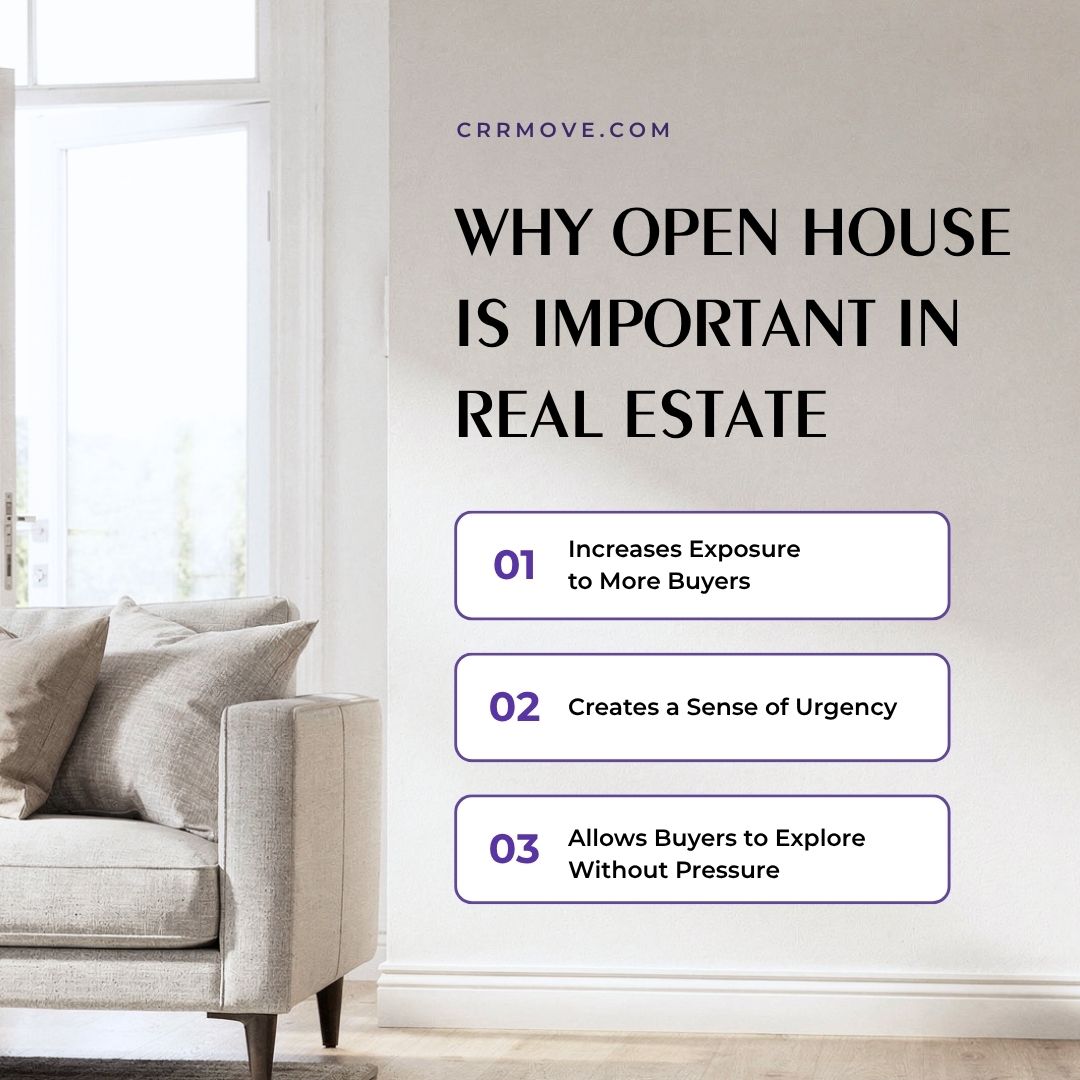
Why Open House Is Important in Real Estate
Increases Exposure to More Buyers
A listing alone can only reach buyers who are already looking. An open house casts a wider net. Walk-in traffic from signage draws in buyers who may not yet be working with an agent. These are people in the early stages of considering a move who would never have scheduled a private showing on their own.
Online exposure amplifies that reach further. When scheduling an open house, it appears on major listing platforms, some of which automatically notify buyers who have saved the property. That combination of physical presence and digital visibility puts your listing in front of a broader audience than a standard MLS entry alone.
Creates a Sense of Urgency
When multiple buyers view a property at the same time, competition becomes evident. That visibility matters for listings and real estate agents.
In a seller’s market, especially, seeing other interested buyers in the same space can shift a buyer’s mindset from casual interest to urgency. The possibility of losing a home they want tends to accelerate decisions. And in some cases, it can produce stronger offers than a private showing would have.
Allows Buyers to Explore Without Pressure
Buyers behave differently when they feel watched. A private showing with an agent closely following can create pressure that works against a natural connection to the property. An open house removes that dynamic.
Buyers move through the space at their own pace, speak freely, and form genuine impressions without feeling obligated to fake interest. That comfort often leads to more honest engagement—and more meaningful conversations when they do have questions.
How Do Open Houses Work in Real Estate?
Real estate agent markets the open house.
After confirming a date and time, the focus shifts to promoting the open house. Most agents market the event across their social media channels, send announcements to their email network, and flag the open house on listing platforms and the MLS. For further guidance, review our guides, “Social Media for Realtors” and “Digital Marketing for Real Estate Agents.”
Potential buyers visit and tour the property.
During the event, a mix of prospective buyers, curious neighbors, and local agents scoping the market will move through the property. Each group is evaluating something slightly different. However, all of them are forming impressions about the home’s features, its value, and whether it fits their needs.
The agent answers questions and follows up with leads.
The listing agent is present throughout the open house to welcome visitors and answer questions about the property, the area, and pricing. Moreover, they collect contact information from everyone who walks through. That information is what turns an open house into a pipeline. It opens the door to follow-up conversations, feedback collection, and—when the timing is right—an offer.
What Is Considered a Successful Open House in Real Estate?
Strong Attendance From Qualified Buyers
A strong open house typically draws 15 to 20 visitors, though attendance alone is not the most meaningful measure of success. What matters more is the quality of the people who tour the property.
A qualified buyer has already spoken with a lender, confirmed their eligibility, and is actively searching for a home. In reality, not everyone who attends an open house fits that description. Curious neighbors and early-stage browsers are common. The real value lies in identifying serious prospects within that mix and strategically following up with them.
Scheduled Second Showings
Most serious buyers will not submit an offer after a single walk-through. Before committing, they typically return for a private showing with their agent. This is an opportunity to evaluate the property more carefully and ask the questions that matter most to them.
When one or two visitors from your open house request that second showing, that is a meaningful indicator of success. It signals genuine interest and puts you closer to an offer than any attendance number will.
Positive Feedback on the Property
After the event, following up with visitors for feedback is one of the most valuable steps a listing agent can take. This can be done through a brief form completed before guests leave or a follow-up email sent within 24 hours.
Consistent positive feedback about the property, location, and price point is a strong indicator that the open house landed well. When feedback points to areas for improvement—such as the property’s condition or its pricing—that information becomes the basis for adjustments. From there, a second open house can be a strategic next step.
Potential Offers or Increased Buyer Interest
In some cases, an open house produces a direct offer—though it is rare. When it happens, it is a clear sign that the event reached the right buyer at the right time. More often, success looks like increased showing requests, qualified leads added to your pipeline, and buyers referencing the open house when they reach back out.
For more on what to expect after the event, read our guide “How Long After an Open House Do Offers Come In?”
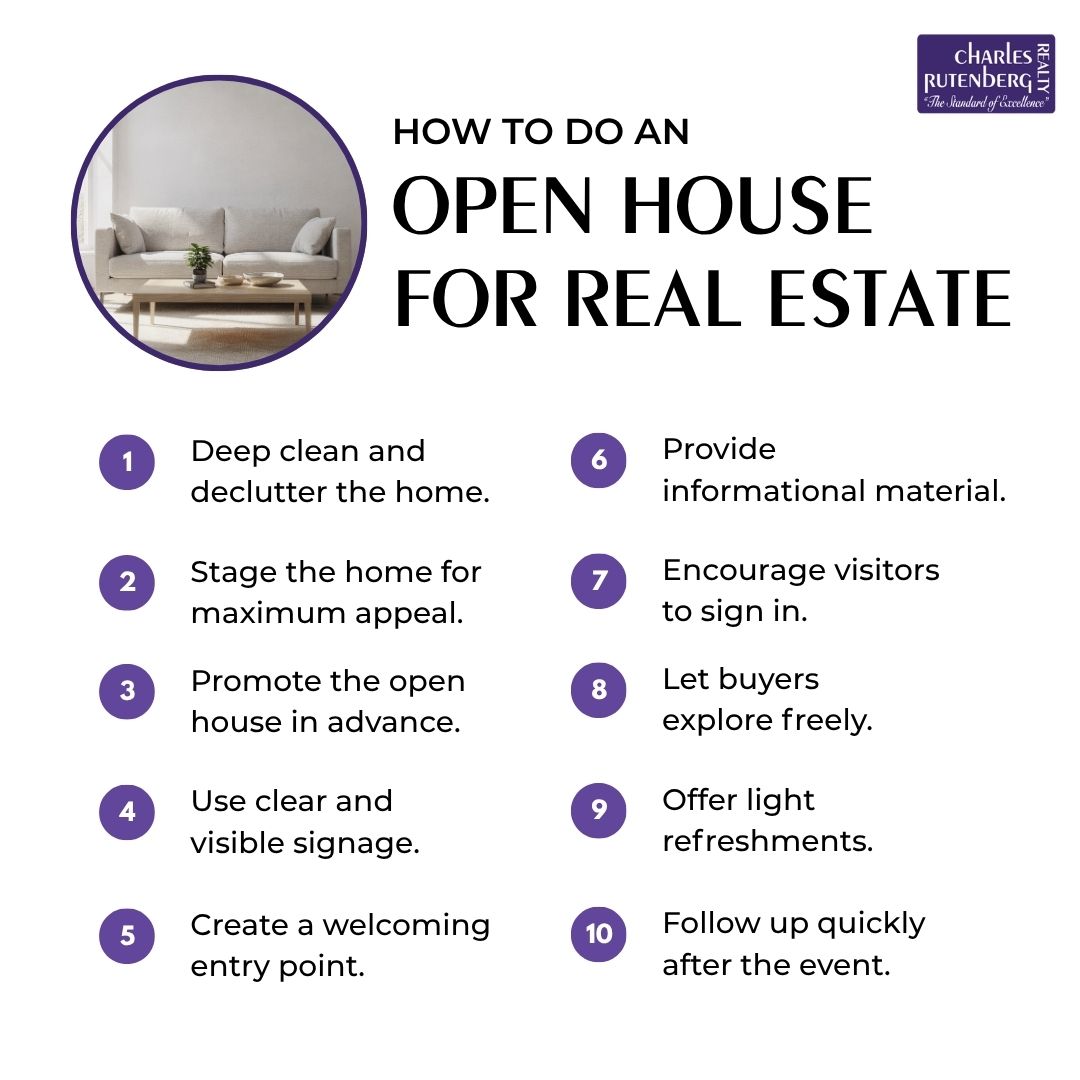
How to Do an Open House for Real Estate
Deep clean and declutter the home.
When your seller agrees to host an open house, preparation is their responsibility—and setting that expectation early matters. The home should be deep-cleaned, decluttered, and depersonalized before the event.
Clients must remove family photos and bold or personal decor while also ensuring every surface is clean and well-maintained. When buyers walk through a space that feels neutral and cared for, it is much easier for them to picture themselves living there.
Stage the home for maximum appeal.
Many sellers choose to stage their home before listing—rearranging furniture, updating decor, and optimizing the space to highlight its strongest features. In many cases, this means working with a professional stager, but the investment tends to pay off. Agents consistently report that staged homes attract offers above asking price, sometimes by as much as 15%.
For an open house specifically, staging is worth serious consideration. It ensures the property makes its strongest possible impression on every buyer who walks through the door.
Promote the open house in advance.
Promotion should begin approximately a week before the event. That means posting on social media, sending announcements to your network, and updating the listing with the open house details.
Building awareness early gives serious buyers time to plan around it. The ones who are genuinely interested in the property will mark it on their calendars—and those are exactly the visitors worth preparing for.
Use clear and visible signage.
Signage remains one of the most reliable tools for driving foot traffic to an open house. Clear, well-placed signs in front of the property and throughout the surrounding neighborhood attract buyers in the area. That includes those who may never have come across the listing online.
For guidance on getting the most out of your signage strategy, review our guide “Open House Signs for Realtors.”
Create a welcoming entry point.
First impressions are formed before a buyer steps through the front door—and reinforced the moment they do. A clean, welcoming entry sets the tone for everything that follows.
Consider encouraging your client to place fresh flowers near the sign-in sheet and to create a tidy, easy-to-navigate entryway. Additionally, ensure you offer a warm, personalized greeting to potential buyers as soon as they enter the home. While small, these details contribute to a professional and memorable experience.
Provide informational material.
Having a professional fact sheet available for visitors is a simple but effective touch. Include the essentials—address, price, square footage, bedroom and bathroom count, and a few strong photos—along with your phone number.
A well-prepared fact sheet answers the most common questions before buyers ask them. This frees up your conversations for more meaningful exchanges. It also gives buyers something tangible to take home and review, which matters when they are weighing multiple properties.
Encourage visitors to sign in.
Every visitor who walks through the door is a potential lead. Encouraging guests to sign in, whether on paper or through a tablet connected to your CRM, ensures no contact slips through the cracks. Capturing their information and where they are in the buying process gives you everything you need to follow up with purpose. That follow-up is where open house traffic converts into clients.
Dive deeper into getting more leads in our guide “Real Estate Lead Generation Ideas” and fill your client pipeline.
Let buyers explore freely.
Resist the urge to follow visitors through every room. Buyers need space to move freely, speak openly, and form honest impressions without feeling watched or pressured. Position yourself near the entrance where you are accessible but not intrusive. When buyers finish their tour and have questions, you will be exactly where they expect to find you.
Offer light refreshments.
Treating an open house like a hosted event rather than a property tour makes a difference in how visitors experience the space. Light refreshments—water, lemonade, cookies, or simple finger food—create a welcoming atmosphere. It also invites buyers to slow down and spend more time in the home. It’s a modest investment that can leave a lasting impression.
Follow up quickly after the event.
Follow up with every visitor within 24 to 48 hours. The event is still fresh in their minds, and timely outreach keeps you front and center at a critical moment.
Use the information you collected to make each follow-up relevant. Unrepresented buyers are an opportunity to introduce your services and offer to show additional listings. Visitors who expressed genuine interest in the property are worth a direct conversation. Additionally, consider calling their representative agent to discuss a private showing.
Generic follow-up gets ignored. Personalized follow-up gets responses.
What Is the Best Time to Host an Open House?
Sunday afternoons remain one of the best times to host an open house. Buyers are less rushed, more likely to be out exploring neighborhoods, and more inclined to stop when they spot a sign. Some may even have pre-planned their weekend around attending open houses on this day.
That said, local context matters. In Florida, football season is very popular, running from September through early February, and Sunday attendance can dip when games are on. During those months, Saturday open houses are worth considering as an alternative.
Host successful open houses in Orlando, Florida, and keep 100% of your commission with Charles Rutenberg Realty.
Hosting a successful open house is one of many skills that set effective listing agents apart from the rest. While direct offers from open houses are not common, the leads, listing exposure, and buyer interest they generate make them a valuable part of any marketing strategy.
At Charles Rutenberg Realty Orlando, we equip our agents with the tools, training, and resources they need to run their business with confidence. This includes making the most of every open house opportunity. And with our 100% commission model, you keep more of what you earn to reinvest back into your business.
If you are ready to take the next step, complete our contact form to connect with our team today.