



For most people, purchasing a home is one of the biggest financial decisions they will ever make. As a real estate agent, it is your role to help buyers understand the potential benefits of buying a house and whether it represents a sound investment for their situation.
Buyers rely on your guidance to explain how homeownership can build equity, increase net worth, and potentially deliver a strong return when they sell. Additionally, it is equally important to discuss the responsibilities of ownership, including hidden costs and potential housing market risks.
In this guide, we explore whether buying a home is a good investment. We will review the financial benefits of homeownership, the true costs involved, and the strategies buyers can use to maximize the value of their investment.

Is Buying a Home a Good Investment? How Realtors Should Answer
Buying a home can be a strong investment when market conditions are favorable. Additionally, buyers must be financially prepared to make a down payment and to manage a monthly mortgage payment.
Homeownership is often one of the largest purchases a person will make. Therefore, it’s important to help clients understand how the decision may affect their finances—both now and in the future. This includes how homeownership can influence their savings, lifestyle, monthly cash flow, and long-term wealth.
Clear guidance in these areas helps buyers make informed decisions about whether buying a home aligns with their financial goals.

Why Buying a Home Is a Good Investment
Appreciation Over Time
Historically, residential real estate tends to appreciate over time. This means buyers often purchase a home at one price and later sell it for a higher value. On a national level, home values typically increase at an average rate of 3% to 5% per year.
However, appreciation can vary significantly across local markets. Factors such as population growth, housing demand, and economic conditions all influence how quickly property values rise. For example, many Florida markets have experienced substantial growth in recent years, with home values increasing by 164% over the last decade.
Equity Growth
When buyers purchase a home, they typically finance the purchase through a mortgage. With each monthly payment, a portion goes towards reducing the loan balance. Over time, this allows homeowners to build equity and increase their ownership stake in the property.
As equity grows, it can create additional financial opportunities. Homeowners may eventually pay off the property entirely. They may also access their equity through options such as a home equity line of credit (HELOC). This ability to build and leverage equity is one of the key financial advantages in homeownership.
Leverage Advantage
Homeownership also provides a level of financial leverage that many other investments do not offer. With a relatively small down payment (sometimes as low as 3.5%), buyers can gain control of a valuable asset.
If the property increases in value over time, that appreciation applies to the home’s full value, not just the initial down payment. As a result, the homeowner’s invested capital can grow significantly, potentially generating a strong return over the long term.
Inflation Hedge
Many buyers have noticed the rising cost of everyday goods due to inflation. Over time, inflation can reduce the purchasing power of money sitting in a savings account. Real estate, however, often serves as a hedge against inflation.
As property values and rents tend to rise alongside inflation, homeowners benefit from the appreciation of their assets. Instead of losing value over time, the money invested in a home has the potential to grow, helping preserve long-term purchasing power.
Tax Advantages
Homeownership provides certain tax advantages. In many cases, homeowners can deduct expenses such as mortgage interest and property taxes, depending on their financial situation.
Additional incentives may be available for qualifying home improvements. For example, energy-efficient upgrades, such as installing solar panels or energy-efficient windows, may qualify for tax credits.
There are also benefits when it comes time to sell. Under current tax rules, homeowners may exclude up to $250,000 in capital gains for individuals or $500,000 for married couples. This applies to the sale of a primary residence, provided certain requirements are met.
What Is the True Cost of Home Ownership?
Property Taxes
Homeowners are required to pay annual property taxes. The amount is based on the property’s assessed value and the local government’s state tax. These rates can vary by city or county.
For example, property taxes in the Orlando area are approximately 6.65 mills, or $6.65 for every $1,000 of taxable property value. Compared to many other states, Florida’s property tax rates are generally below the national average. These lower rates can help make homeownership more affordable across much of the state.
Home Insurance
Homeowners with a mortgage are typically required to carry homeowners’ insurance. This policy protects the property against risks such as fire, theft, liability claims, and certain natural disasters. Because coverage options vary, homeowners should compare policies to find one that best fits their needs and level of protection.
In Florida, the average annual cost of homeowners’ insurance is approximately $5,838. Premiums tend to be higher than in many other states due to weather-related risks, including hurricanes. However, insurance costs may be lower for properties located farther inland and away from coastal areas.
If you are assisting homeowners who have experienced weather-related property damage, review our guide “How to Sell a House That Has Flooded.” It offers helpful insights on navigating the sales process in these situations.
Maintenance
Homeownership also comes with ongoing maintenance expenses. Routine upkeep may include landscaping, HVAC servicing, gutter cleaning, inspections, plumbing repairs, and maintenance of systems such as the water heater.
On average, homeowners should expect to spend about 1% to 3% of the home’s value each year on maintenance. Keeping the property in good condition prevents large repair costs while also protecting the home’s long-term value.
Repairs and Improvements
Over time, homeowners should plan to invest in repairs and improvements throughout the property. While many upgrades can enhance comfort and functionality, they can also increase the home’s overall value.
Maintaining and improving the property preserves its condition and can strengthen its market appeal. Additionally, strategic updates and timely repairs often support the long-term success of the investment when the homeowner eventually decides to sell.
Closing Costs
When purchasing a home, buyers should plan for more than just the down payment. Closing costs are an important expense that many first-time buyers overlook during the process.
These costs cover various services to complete the transaction, such as lender fees, title services, and administrative expenses. In most cases, buyers should expect closing costs to total approximately 2% to 5% of the home’s purchase price. Planning for these expenses in advance helps ensure a smoother transaction and avoids surprises at closing.
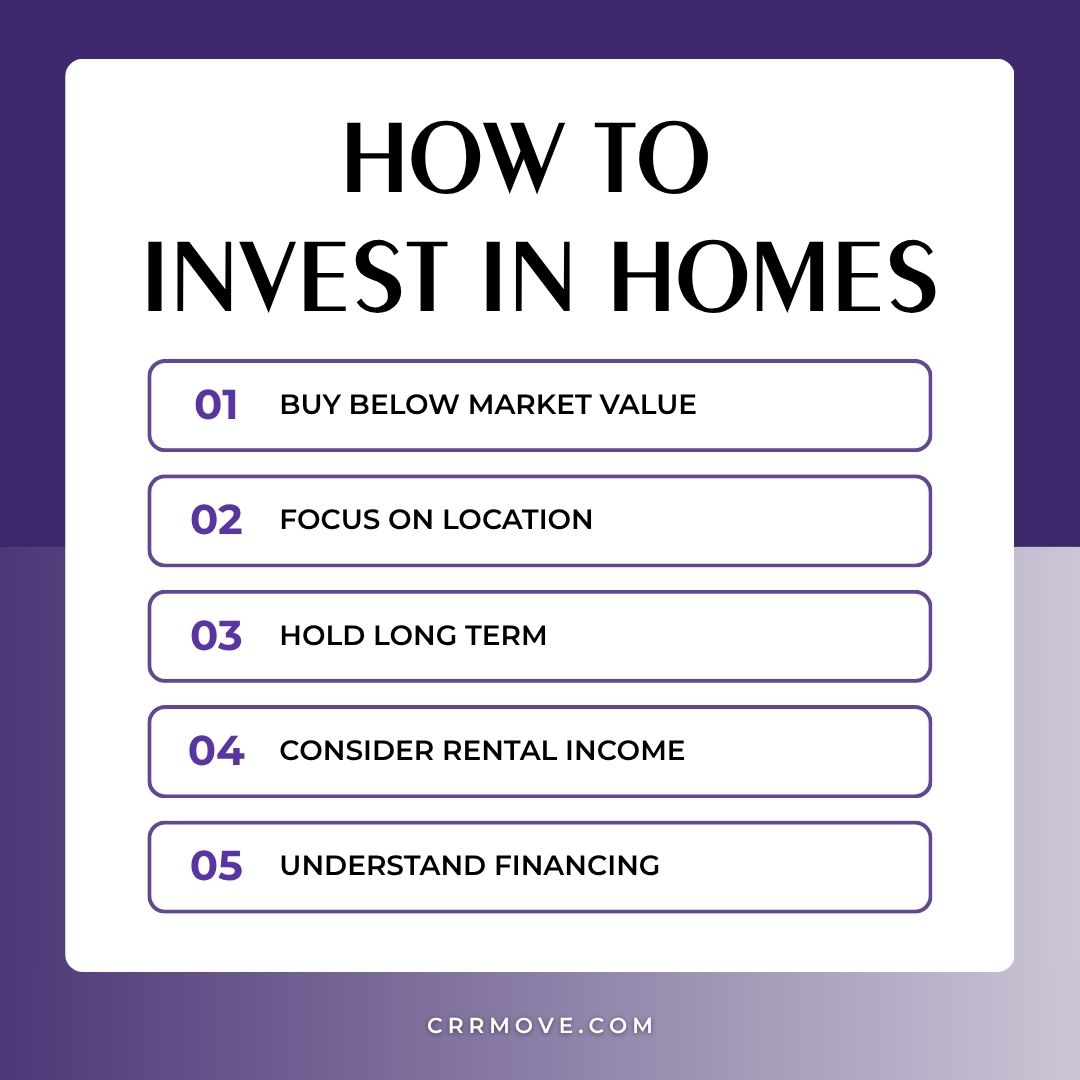
How to Invest in Homes
Buy Below Market Value
For clients who view a home purchase as both a place to live and a financial investment, it can be beneficial to focus on properties priced below market value. Identifying these opportunities may require additional effort on your part.
In many cases, this involves locating motivated sellers or properties that may have low home prices compared to similar listings in the area. While these opportunities are not always easy to find, they do exist.
Focus on Location
Investing in real estate involves more than evaluating the property itself. Location plays a critical role in long-term value. Buyers should look for areas experiencing strong job growth, increasing population, and planned infrastructure development.
Neighborhoods considered “up-and-coming” often present the greatest opportunity for appreciation over time. In contrast, established communities that have already reached peak demand may see slower growth. Identifying markets with strong future potential helps buyers maximize the long-term value of their investment.
Hold Long Term
For many buyers, residential real estate performs best as a long-term investment. Holding a property for 10 to 30 years allows homeowners to benefit from market appreciation, mortgage paydown, and potential tax advantages. Over time, these factors can significantly strengthen the overall return on their investment.
Consider Rental Income
There are many reasons people choose to purchase a home. For buyers focused on maximizing the financial return of their investment, generating rental income can be a valuable strategy.
One approach that has grown in popularity is “house hacking.” This involves renting out a portion of the property while still living in it. It is particularly effective because rental income can help cover mortgage payments, maintenance costs, or other housing expenses.
Other buyers may purchase properties strictly as investments. By renting these homes to short- or long-term tenants, investors can generate consistent income while building equity and long-term wealth.
Understand Financing
Real estate agents do more than help buyers find the right property. They also play an important role in helping buyers understand their financing options.
Factors such as interest rates, down payment size, and whether the loan is fixed-rate or adjustable can all influence the investment’s long-term performance. When agents can clearly explain how these elements affect affordability and long-term value, buyers are better equipped to make informed decisions.
Possible Reasons Why Buying a Home Is Not a Good Investment
In some situations, purchasing a home may not be the most strategic investment for a buyer. Helping clients evaluate whether the timing and financial conditions are right can save them significant time and frustration.
There are several scenarios where buying a home may not be the best decision, including:
- Buyer plans to move within 3 to 5 years of purchasing the property
- Local market is declining or stagnant, increasing the risk of negative equity
- Buyer does not have the financial stability to comfortably manage homeownership costs
- Interest rates are high, and the buyer does not intend to hold the property long term
- The purchase is based on speculation rather than sound financial fundamentals
By guiding clients toward the right decision—even when it means advising them to wait—you build credibility, trust, and a stronger long-term real estate business.
Help more buyers make sound real estate investments with Charles Rutenberg Realty.
One of the most rewarding aspects of a real estate career is helping buyers achieve homeownership. It becomes even more meaningful when you can also guide them toward making a smart and strategic investment with their purchase.
If you enjoy helping people reach important milestones while making sound financial decisions, Charles Rutenberg Realty Orlando may be the right place for you. Our agents assist buyers in securing valuable real estate investments while benefiting from our 100% commission model, which allows them to keep more of what they earn.
In addition, our agents have access to professional training programs, advanced technology, and dedicated support. Whether you focus on first-time homebuyers, international investors, or rental property owners, Charles Rutenberg Realty provides the resources to help you grow your business.
Schedule a call with our broker to learn how we can support your real estate career while helping you maximize your earnings.