Choosing whether to pursue a career in real estate can feel both exciting and overwhelming. The industry offers exceptional earning potential and continues to experience strong demand nationwide.
However, the pressure of maintaining full regulatory compliance while guiding clients through complex transactions can be intimidating. It can make even the most motivated professionals pause and evaluate their next steps.
If you’re exploring a career in real estate, this guide will offer the expert-level clarity you need. We will outline the key advantages and challenges of the profession, along with the various career paths available within the industry. Moreover, we’ll explain how you can begin your journey with Charles Rutenberg Realty Orlando.

Is Real Estate a Good Career? Agent Insights Revealed
The real estate industry offers a highly rewarding and financially compelling career path for self-motivated professionals. It’s an excellent option for those who excel at relationship-building and guiding clients through complex property transactions. Demand remains strong, with an estimated 46,300 openings for real estate brokers and sales agents each year.
While the median income for real estate agents is $56,320, the true earning potential is unlimited. This is especially true for those who pair consistent effort with strategic networking. All of this comes with the added advantage of flexible hours and control over your business.
Before stepping into the field, it’s essential to understand what the profession entails. Gaining a clear picture of the benefits, challenges, and expectations will help you enter the industry with confidence. It will also lay the foundation for a successful career in real estate.
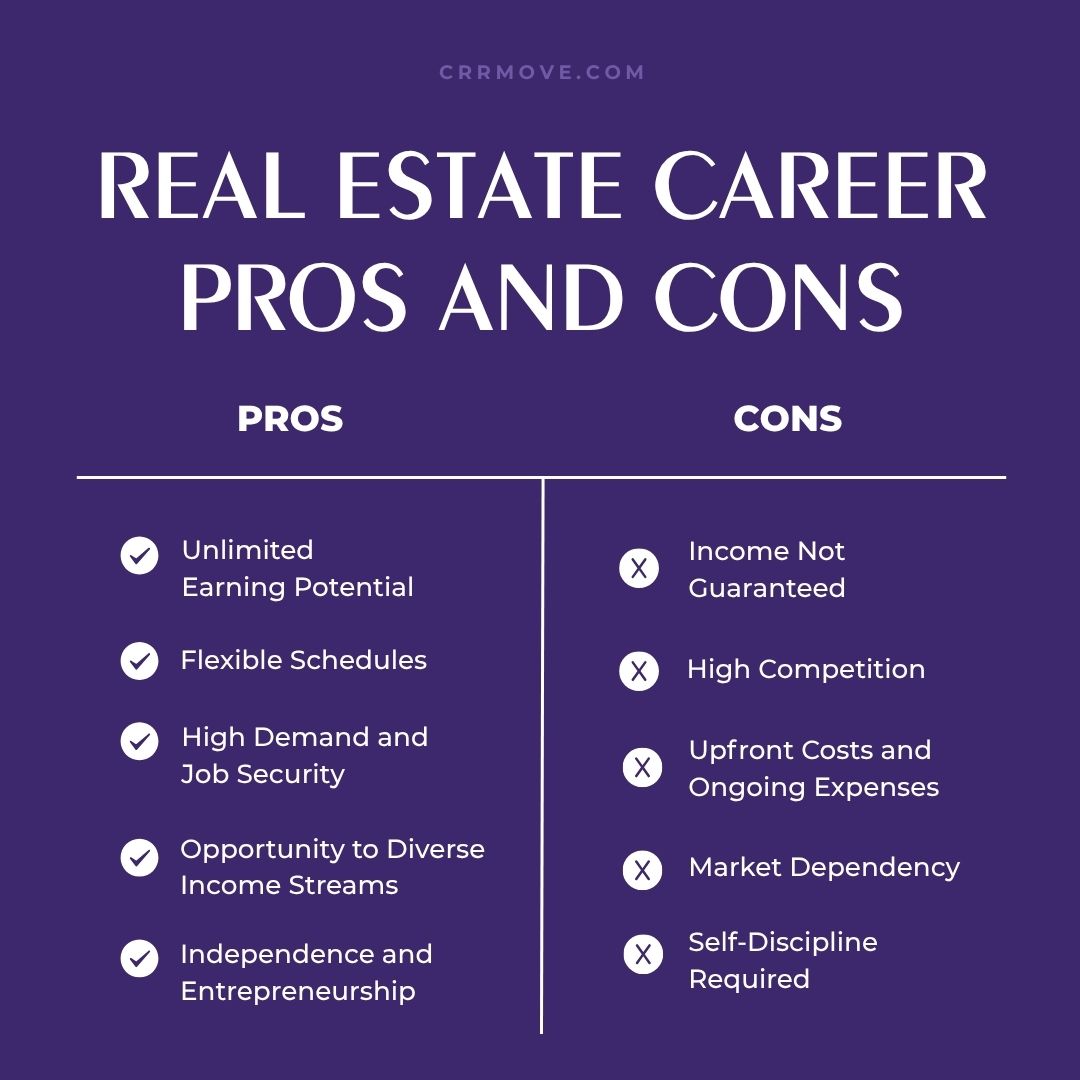
What Are the Pros and Cons of Working in Real Estate?
Pros of Real Estate Career
Unlimited Earning Potential
Most real estate professionals earn their income through commission-based sales, generated when they represent clients in buying, selling, or leasing a property. One of the most compelling aspects of the industry is the unlimited earning potential. There is no ceiling on how much an agent or broker can make.
Traditionally, agents earn between 5% and 6% of a property’s sale price, shared between the listing and buyer’s representatives. For example, on a $500,000 home, your commission could be approximately $15,000. For agents who choose to specialize in luxury real estate, where properties are valued in the millions, those earnings scale dramatically.
And when you partner with Charles Rutenberg Realty, your income potential expands even further. As a 100% commission brokerage, you retain the full commission you earn, paying only transaction and administrative fees. This structure empowers you to maximize profitability and build long-term financial stability in your real estate career.
Flexible Schedules
One of the most appealing advantages of a real estate career is the ability to control your schedule. As a licensed professional, you determine when—and where—you work. If you prefer to begin meetings later in the morning or structure your day around personal commitments, you have the flexibility to do so.
However, flexibility does not mean fewer working hours. Real estate is a client-driven business that often requires evenings, weekends, and consistent availability. The distinction is having the autonomy to design a routine that aligns with your lifestyle and business needs.
This level of independence is desirable to those transitioning from traditional 9-5 roles. It’s also ideal for those seeking a career that offers both freedom and professional growth.
To make the most of the flexibility a real estate career offers, explore our guide, “Can You Be a Part-Time Real Estate Agent and Still Succeed?” It provides a clear view of how to build a sustainable real estate business while managing additional commitments.
High Demand and Job Security
Job security is an important consideration when transitioning into a new field—and real estate continues to offer consistent demand. Industry projections show a 3% growth in real estate career opportunities over the next decade, reinforcing its long-term stability.
Equally encouraging, 89% of home sellers now work with a real estate agent. In comparison to recent trends, this figure has increased by 2% from the previous year. At the same time, For Sale by Owner (FSBO) transactions have dropped to a historic low of just 7%.
These trends underscore a clear reality: buyers and sellers continue to rely heavily on qualified real estate professionals. This creates a steady pipeline of opportunity for those entering the industry.
Opportunity to Diverse Income Streams
Real estate professionals have multiple avenues to generate income beyond traditional buyer and seller representation. One of the most valuable—and often overlooked—sources is referral income. When you refer a client to a trusted colleague, particularly one licensed in another state, you can earn a referral fee. It’s a streamlined, efficient way to expand your earning potential without additional transaction work.
Many agents also diversify their income through coaching or mentoring new agents or engaging in commercial real estate. They also earn additional income by offering property management services or investing in real estate themselves. These pathways provide long-term stability and scalability for a growing real estate career.
Independence and Entrepreneurship
Choosing a career in real estate means stepping into the role of a true business owner. As an agent, you have complete control over your brand, your marketing strategy, and the direction in which you grow your career.
You manage multiple responsibilities—lead generation, client services, negotiations, and operations. However, you simultaneously gain the freedom to build your business exactly the way you envision it.
Cons of Real Estate Career
Income Not Guaranteed
While real estate offers exceptional earning potential, it’s important to recognize that income is not guaranteed. Because agents are compensated through commission, periods without active transactions can directly impact revenue.
This reality underscores the importance of commitment. Building a successful real estate career requires consistency, discipline, and a willingness to stay fully engaged. For those prepared to invest in their business, the long-term rewards can be significant.
High Competition
Real estate professionals are consistently in demand, yet the industry is highly competitive. With more than 3 million active licensees nationwide, distinguishing yourself from other agents can feel challenging at first.
However, once you establish a clear personal brand and define your area of specialization, standing out becomes significantly easier. Success in this space is rooted in strategy, experience, and time. When those elements align, your business grows with confidence and consistency.
Upfront Costs and Ongoing Expenses
Unlike many traditional career paths, entering the real estate industry requires an initial financial investment. Prospective agents must account for upfront expenses, such as the state-approved pre-licensing course, licensing exam fees, and association memberships.
Beyond that, ongoing operational costs—MLS access, marketing materials, technology tools, and professional development—are essential. These components are required to run a successful real estate business.
It’s important to view these expenses as an investment in your long-term earning potential. The agents who understand and plan for these costs are the ones who build sustainable, profitable careers. For a comprehensive overview, explore our detailed guide, “How Much Does It Cost to Get a Realtor License?”
Market Dependency
There are elements of a real estate career that remain outside an agent’s control; most notably, shifting market conditions. Fluctuating interest rates, limited inventory, economic slowdowns, and changes in local policy can all influence buyer behavior and transaction volume.
While these challenges may present temporary obstacles, they are far from insurmountable. Skilled agents adapt, adjust their strategies, and continue to create opportunities regardless of market cycles.
Self-Discipline Required
A career in real estate offers unparalleled flexibility, but it also demands strong self-discipline and intrinsic motivation. As an agent, you are essentially operating your own business. No manager is holding you accountable for prospecting, following up with clients, or scheduling showings. Your success is driven entirely by the effort you choose to put in.
Self-starters with the ambition to control their professional growth will find that real estate is the opportunity they seek.
What Jobs Are in the Real Estate Industry?
Real Estate Agent
One of the most common and rewarding paths in the industry is becoming a real estate agent. This role offers the flexibility to work on your terms while guiding buyers and sellers through complex property transactions. Your compensation is earned through a percentage of each successful closing, creating substantial income potential as your portfolio grows.
Better yet, the process to obtain your real estate license is streamlined and accessible. It allows motivated professionals to begin building their careers with confidence and efficiency. For those interested in the process, visit “How Long Does It Take to Become a Realtor?”
Leasing Agent
If traditional buyer and seller representation isn’t the right fit, a leasing agent role may be an excellent alternative. Leasing agents assist property owners in securing qualified tenants for vacant rentals—a service that still requires an active real estate license.
Compensation is typically structured as either one month’s rent or a predetermined flat fee per successfully filled vacancy. This career path also offers flexibility. You can operate independently and build your own leasing-focused real estate business under a certified real estate broker.
Property Manager
Another viable career path within the real estate industry is property management. In this role, you serve as the primary liaison between landlords and tenants. You oversee the day-to-day operations that keep the property running smoothly.
Responsibilities often include coordinating maintenance, collecting rent, conducting inspections, and filling vacancies. Compensation typically takes the form of a monthly flat fee or a percentage of rental income.
There are additional requirements to become a property manager in Florida. For example, you must hold an active real estate license for at least 24 months within the past five years. Additionally, you must also complete the required additional licensing examinations.
Commercial Real Estate Agent
If traditional residential sales aren’t where your interests lie, you may find commercial real estate to be a more compelling path. This specialization focuses on selling, acquiring, or leasing properties used for commercial businesses.
These transactions often involve larger deals, long-term leases, and more complex negotiations. While more strategic, this means the earning potential is significantly higher than standard residential sales.
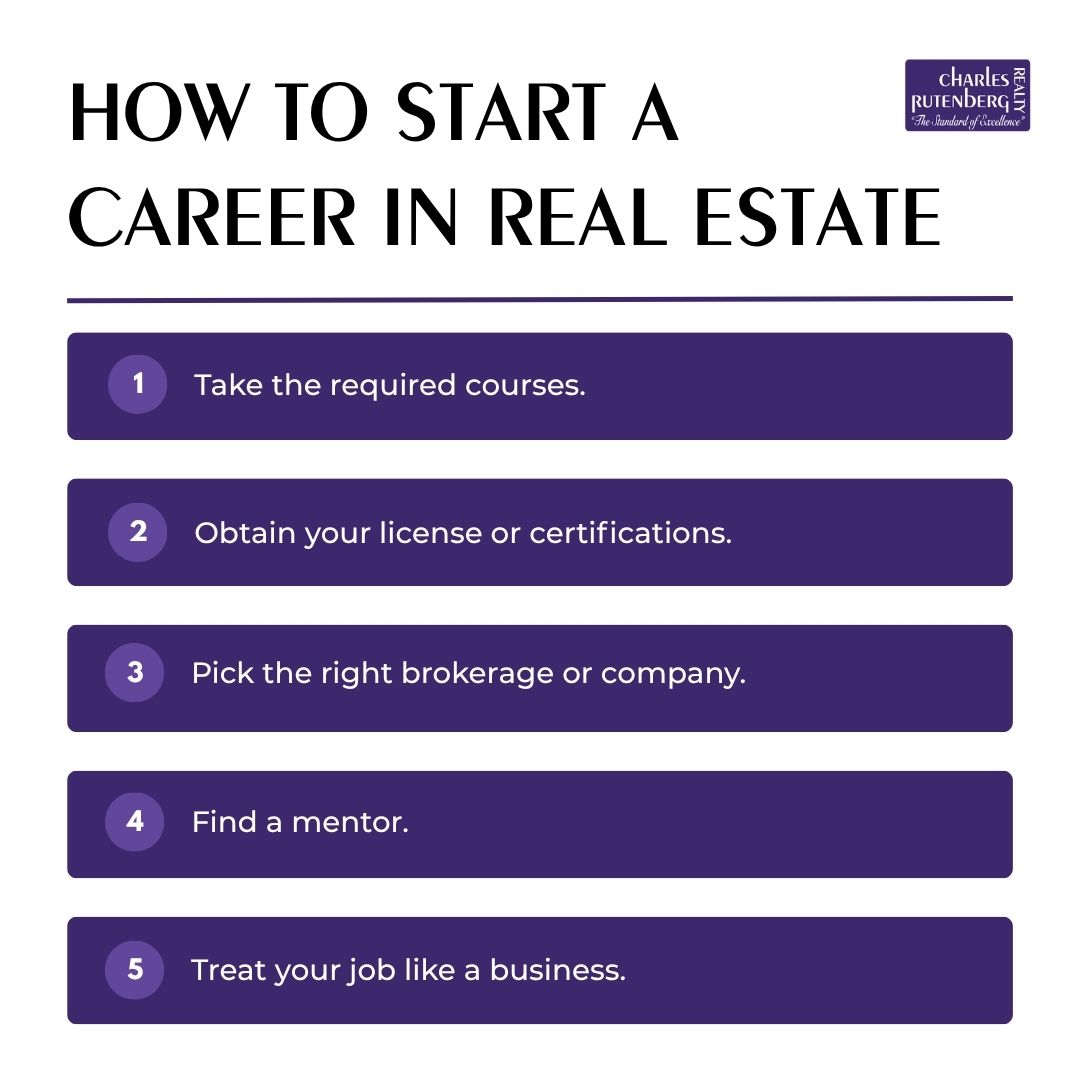
How to Start a Career in Real Estate
Take the required courses.
Before beginning your real estate career, it is crucial to understand the licensing requirements for your chosen path. For aspiring real estate agents in Florida, this includes completing a state-mandated 63-hour pre-licensing course.
However, if you plan to pursue roles such as property management, commercial brokerage, or other specialized positions, the requirements may differ. Reviewing these guidelines early ensures you are fully prepared and positioned for success.
For additional information, review our comprehensive guide: “Do You Need a Degree to Be a Real Estate Agent?”
Obtain your license or certifications.
After completing the required pre-licensing education, your next step is to pass the state licensing exam and secure any additional certifications needed for your role. In Florida, the Sales Associate licensing exam is administered by Pearson VUE.
It consists of multiple-choice questions designed to assess your understanding of real estate law, principles, and practices. Successfully passing the exam is what officially qualifies you to move forward in your real estate career.
Pick the right brokerage or company.
After passing the licensing exam, your next step is to affiliate with a brokerage. This is one of the most important decisions you will make in your real estate career. The brokerage you choose will influence the level of guidance, training, and support you receive.
A strong brokerage provides comprehensive agent development, access to professional tools and technology, and reliable administrative assistance. Just as important is the commission structure. Many new agents start with a traditional 50/50 split, which limits early earning potential.
At Charles Rutenberg Realty, we take a different approach. Our agents keep 100% of their commission while receiving exceptional support, industry-leading resources, and an infrastructure designed to promote growth.
Find a mentor.
Holding an active real estate license is only the first step. Confidence comes with experience. Many new agents find that partnering with a mentor or joining a team provides the guidance needed to navigate transactions effectively.
An experienced industry professional can accelerate your learning curve and offer practical insights. They can also help you build the confidence required to operate independently and serve clients at a higher level.
Treat your job like a business.
From the very beginning, treat your real estate career as a business—not just a job. Establish clear goals, build productive daily routines, and commit to continuous learning and skill development. This business-owner mindset is what distinguishes successful, long-term agents from those who leave the industry.
Begin your real estate career with the support you deserve at Charles Rutenberg Realty.
If this guide has confirmed that a real estate career is the right next step for you, it’s time to speak with Charles Rutenberg Realty.
For more than 20 years, we have upheld a standard of excellence across the Orlando market. With a team of 2,100+ agents, we offer unmatched brokerage support while allowing every agent to keep 100% of their commission.
If you’re ready to elevate your career and partner with a brokerage committed to your long-term success, fill out our contact form. We’ll walk you through what affiliating with Charles Rutenberg Realty can mean for your future in real estate.