



Assisting homebuyers and real estate investors in buying a pre-foreclosure property can be more complex than navigating a traditional home sale. These properties are typically owned by homeowners facing financial hardship who have fallen behind on mortgage payments. In an effort to avoid foreclosure, they may choose to sell the property—often at a price below market value.
While this situation can present a strong financial opportunity for buyers, it requires careful guidance and a clear understanding of the process. As a real estate professional, your role is to help clients navigate these transactions with confidence.
If you are considering assisting clients with pre-foreclosure purchases, this guide provides the foundation you need. We will explain what a pre-foreclosure property is, how the purchasing process works, and key considerations that help clients make informed, strategic decisions.
How Do You Buy a Home in Pre-Foreclosure?
Many people are familiar with the foreclosure process. However, few realize that it is possible to purchase a property during pre-foreclosure. In fact, many overlook this market, yet it can present strategic opportunities to investors and well-prepared buyers.
Purchasing pre-foreclosure homes is typically more time-consuming than a traditional transaction. Buyers and their agents must proactively identify potential opportunities, contact homeowners directly, and negotiate the terms of the sale. In some cases, these efforts can uncover opportunities that are not widely available through conventional real estate channels.
Understanding the legal framework, potential risks, and strategic considerations associated with pre-foreclosure sales is key to guiding your clients with confidence and professionalism.
What Does It Mean When a Home Is in Pre-Foreclosure?
When a property enters pre-foreclosure, the homeowner still retains possession and control of the home after receiving a notice of default. At this stage, the owner has the legal opportunity to sell the property before the lender proceeds with a formal foreclosure.
State law generally determines the length of the pre-foreclosure period, and it often varies by state. In Florida, for example, homeowners are generally provided a 120-day pre-foreclosure window before foreclosure proceedings advance.
This period presents a valuable opportunity for homeowners to avoid foreclosure by selling the property and paying off their outstanding mortgage balance. It also presents a strategic opening for buyers to negotiate directly with the homeowner on price and terms.
When handled properly, pre-foreclosure transactions can benefit both parties. It helps homeowners protect their financial standing while allowing buyers to secure the property at a competitive value.
Can You Buy a Home in Pre-Foreclosure?
It is certainly possible to buy a pre-foreclosure property. However, the process typically requires working directly with the homeowner to negotiate the terms of the sale. These transactions often require patience, clear communication, and a strong understanding of the legal and financial requirements involved.
In certain situations—such as a short sale, where the homeowner sells the property for less than the remaining mortgage balance—pre-approval from the lender is required. Securing this approval is a critical step, as the lender must agree to accept the reduced payoff amount.
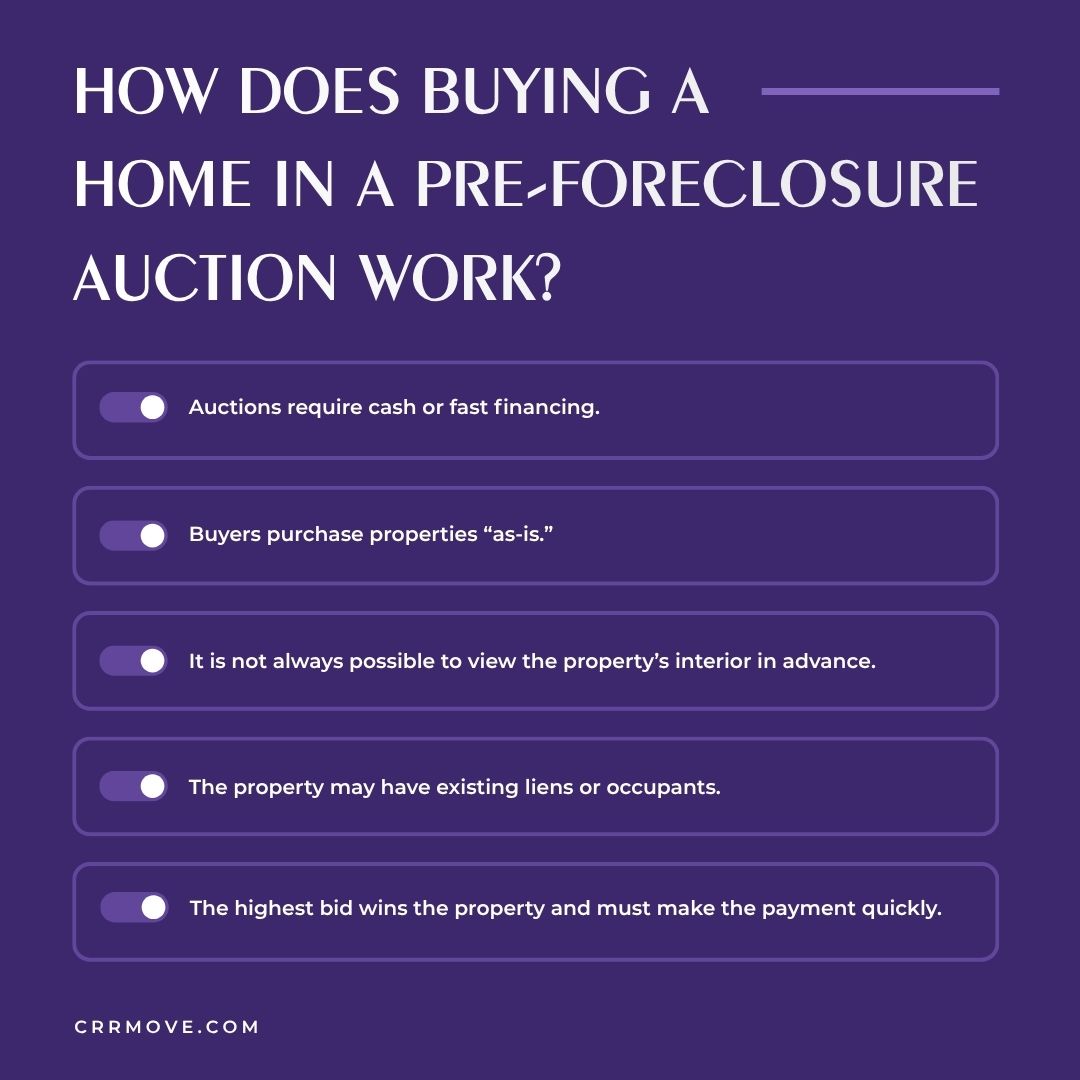
How Does Buying a Home in a Pre-Foreclosure Auction Work?
There is a common misconception that all pre-foreclosure properties are sold at auction. In reality, most bank-owned properties only go to auction after the foreclosure process is complete.
However, in certain circumstances, a homeowner in pre-foreclosure may choose to voluntarily auction the property to sell quickly and satisfy their debt. Understanding this distinction helps you set accurate expectations for buyers and position yourself as a knowledgeable, trustworthy advisor.
Auctions require cash or fast financing.
When purchasing a property at auction, buyers must present cash or secure fast financing to meet strict contractual timelines. In many cases, the full payment is required within 24 hours to 30 days, depending on the specific auction terms.
Ensuring your clients have financing arranged before placing a bid is essential. Proper preparation not only accelerates the transaction process but also reduces risks and increases the likelihood of a successful closing.
Buyers purchase properties “as-is.”
When purchasing a pre-foreclosure property at auction, buyers are typically required to accept the home “as-is.” In many cases, there is limited or no opportunity to conduct a formal home inspection before the sale finalizes. As a result, any structural concerns, maintenance issues, or needed repairs become the buyer’s responsibility.
Setting this expectation early is critical. Understanding the potential costs of repairs and renovations helps your client determine a realistic purchase budget.
It is not always possible to view the property’s interior in advance.
In many auction scenarios, not only are inspections limited, but access to the property’s interior may also be restricted. Buyers often rely solely on photographs and publicly available information provided by the auction company.
This lack of direct access is one of the more significant risks associated with purchasing pre-foreclosure homes at auction. It is essential to help clients understand this uncertainty and factor potential repair costs into their strategy.
The property may have existing liens or occupants.
One of the primary risks associated with purchasing a property at auction is the possibility of outstanding tax liens or existing occupants. If unpaid taxes or liens are attached to the property, the responsibility for resolving those obligations transfers to the buyer.
In addition, if individuals still occupy the property, removing residents may require formal legal proceedings. That said, the likelihood of occupancy issues is generally lower when homeowners voluntarily place the property up for auction.
The highest bid wins the property and must make the payment quickly.
When participating in the auction of a pre-foreclosure property, the home typically goes to the highest bidder. However, depending on the type of auction, the buyer may need to wait for the seller’s formal approval before proceeding.
Once the bid is accepted, the buyer must submit an immediate deposit. They must then pay the remaining balance within the timeframe outlined in the auction terms. After satisfying all conditions, the transfer of ownership occurs within 30 to 60 days, depending on transaction details and requirements.
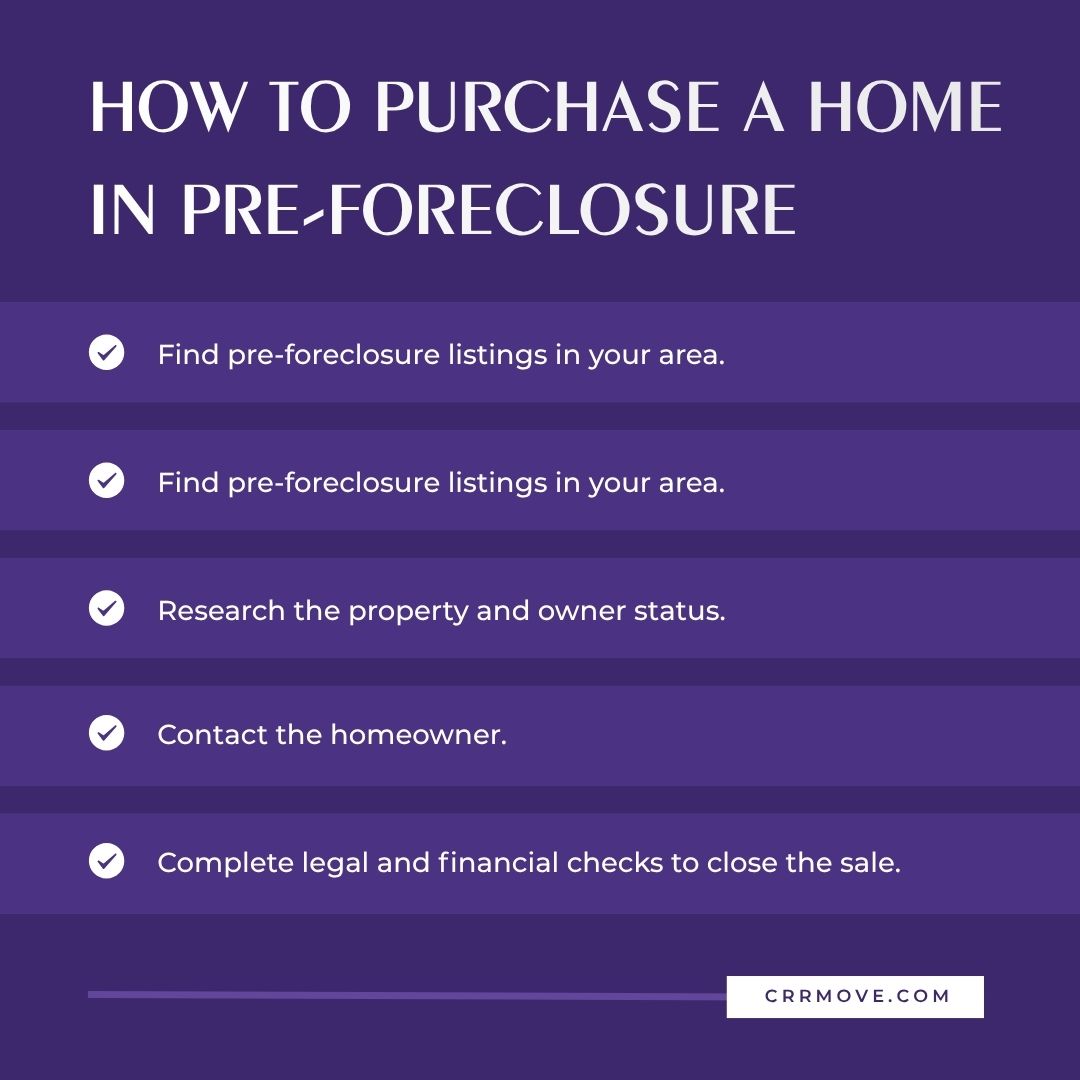
How to Purchase a Home in Pre-Foreclosure
It is entirely possible to purchase a pre-foreclosure property without going through an auction. In fact, this is often the most common and practical approach.
By negotiating directly with the homeowner during the pre-foreclosure stage, buyers may have greater flexibility in pricing, financing, and closing timelines. For agents, developing expertise in this area can create consistent opportunities to serve clients. Additionally, you can position yourself as a trusted resource in a specialized segment of the market.
Find pre-foreclosure listings in your area.
To locate pre-foreclosure opportunities, you or your clients can begin by reviewing public records for lis pendens or notice of default filings. These records identify properties that have entered the pre-foreclosure stage and typically include details, such as the homeowner’s name and property information.
In addition to public records, specialized real estate platforms—such as Privy Pro, BatchLeads, and Foreclosure.com—can streamline the search process. They identify potential pre-foreclosure opportunities more efficiently.
If you plan to focus on this niche, investing in reliable technology can provide a meaningful competitive advantage. Additionally, it can help you uncover opportunities before they are widely known.
Research the property and owner status.
An essential step in purchasing a pre-foreclosure property is conducting thorough due diligence. This process typically includes ordering a title search to confirm whether any liens, outstanding debts, or ownership disputes are attached to the property.
In addition, this research can provide valuable insight into the foreclosure timeline. Understanding how close the property is to foreclosure may strengthen your client’s negotiation position. This is especially true when the deadline is approaching, and the homeowner is motivated to sell quickly.
Contact the homeowner.
Buying a pre-foreclosure home involves working directly with the homeowner. This begins by initiating contact to open the lines of communication and start the negotiation process.
Throughout these interactions, maintaining a successful and professional approach is essential. Clearly communicate that your client is interested in submitting an offer on the property. It’s also an opportunity to better understand the homeowner’s circumstances and timeline. This information can help guide negotiations and position the transaction for a smoother outcome.
Make an offer and negotiate the price and terms.
When a homeowner expresses interest in selling their property during the pre-foreclosure stage, your client may submit an offer. This is the point at which formal negotiations begin.
If the proposed offer is less than the total amount owed to the lender, the transaction becomes a short sale. This requires lender approval before it can move forward. However, if the offer is sufficient to fully satisfy the outstanding debt, the sale can proceed without the lender’s direct involvement.
Complete legal and financial checks to close the sale.
Once the homeowner accepts the buyer’s offer, the transaction moves into the formal legal process. At this stage, the real estate professional takes the lead in managing documentation, coordinating verifications, and ensuring compliance with all regulatory requirements.
When the transaction closes successfully, ownership of the property transfers to the buyer, and the seller avoids foreclosure. This outcome can provide meaningful relief for the homeowner while allowing the buyer to secure a valuable investment opportunity.
Assist buyers in purchasing pre-foreclosure property and keep 100% of your commission with Charles Rutenberg Realty.
Real estate professionals who focus on a specific transaction type often position themselves for stronger, more consistent success. Specializing in helping buyers and investors purchase pre-foreclosure properties can be an effective way to differentiate your services.
When you partner with Charles Rutenberg Realty Orlando, you can serve more clients while keeping 100% of your commission. This structure allows you to reinvest more of your earnings into marketing, technology, and business growth. Moreover, you still benefit from professional support, training, and administrative resources.
If you are ready to explore what your future in real estate could look like, schedule a call with our broker. Your career at Charles Rutenberg Realty is waiting.