Real estate has a strong reputation as an accessible career with flexible hours, unlimited income potential, and the opportunity to own your business. Many people do find genuine success in the industry. However, there is a reality worth understanding before committing to the path: becoming a Realtor is not the difficult part. Building momentum after licensure is.
Success in real estate requires dedication, persistence, and a self-starter mindset that sustains itself without external structure. The licensing process is straightforward. What follows—generating leads, building a client base, and competing in competitive markets—is where most new agents face real challenges.
This guide addresses those realities directly. We cover the most common difficulties newly licensed agents face and how experienced Realtors work through them. Additionally, we will explain what the licensing process itself involves. By the end, you will have a clear and honest picture of what pursuing this career actually looks like.
How Hard Is It to Become a Realtor? The Unexpected Realities
People who enjoy building relationships and are comfortable promoting themselves tend to find real estate rewarding. More specifically, the career suits those energized by conversation, competition, and the process of helping clients through significant decisions.
Those who have not prepared for the self-driven, commission-only nature of the role can find the adjustment difficult. You do not have a manager assigning you leads, and you do not receive a standard paycheck at the end of the month.
Before starting the licensing process, understanding the realities of the career matters. It is not only open houses, networking events, and commission checks. It involves late-evening property tours, consistent networking, deliberate brand-building, and the discipline to keep going during slow periods.
That honest picture is what sets realistic expectations—and those realistic expectations are what give new agents the best chance of succeeding.
What Is a Realtor?
A Realtor is a licensed real estate agent who has taken the additional step of joining the National Association of Realtors (NAR). That membership requires adherence to a formal Code of Ethics. This code distinguishes Realtors from agents who hold a license but are not NAR members. Like all licensed agents, Realtors work under a licensed broker to represent buyers and sellers in property transactions.
Many Realtors find their greatest success by specializing in a specific niche. Luxury properties, rental transactions, first-time homebuyers, and investment properties are among the most common areas of focus. The right niche depends on your market, your network, and where your professional interests naturally align.
Want a deeper look at what sets a Realtor apart from a licensed agent? Review our guide “What’s the Difference Between a Realtor and a Real Estate Agent?”
Is It Hard to Become a Realtor?
Becoming a Realtor is not inherently difficult. It requires dedication and motivation, and some will find the path smoother than others. However, it’s essential to understand that the real work starts after you receive your license, not before. More specifically, this knowledge is one of the most useful tools a prospective agent can have.
The level of effort and commitment the career demands catches many newly licensed Realtors off guard. This typically happens when people enter the industry without a full understanding of what the job actually involves. When you know what to expect going in, the transition is much more manageable.
For many aspiring agents, the licensing exam feels like the biggest hurdle. The good news is that you can retake it as many times as needed. In reality, however, passing the exam is only the beginning. The more substantial challenges tend to emerge after licensure, when the work truly begins.
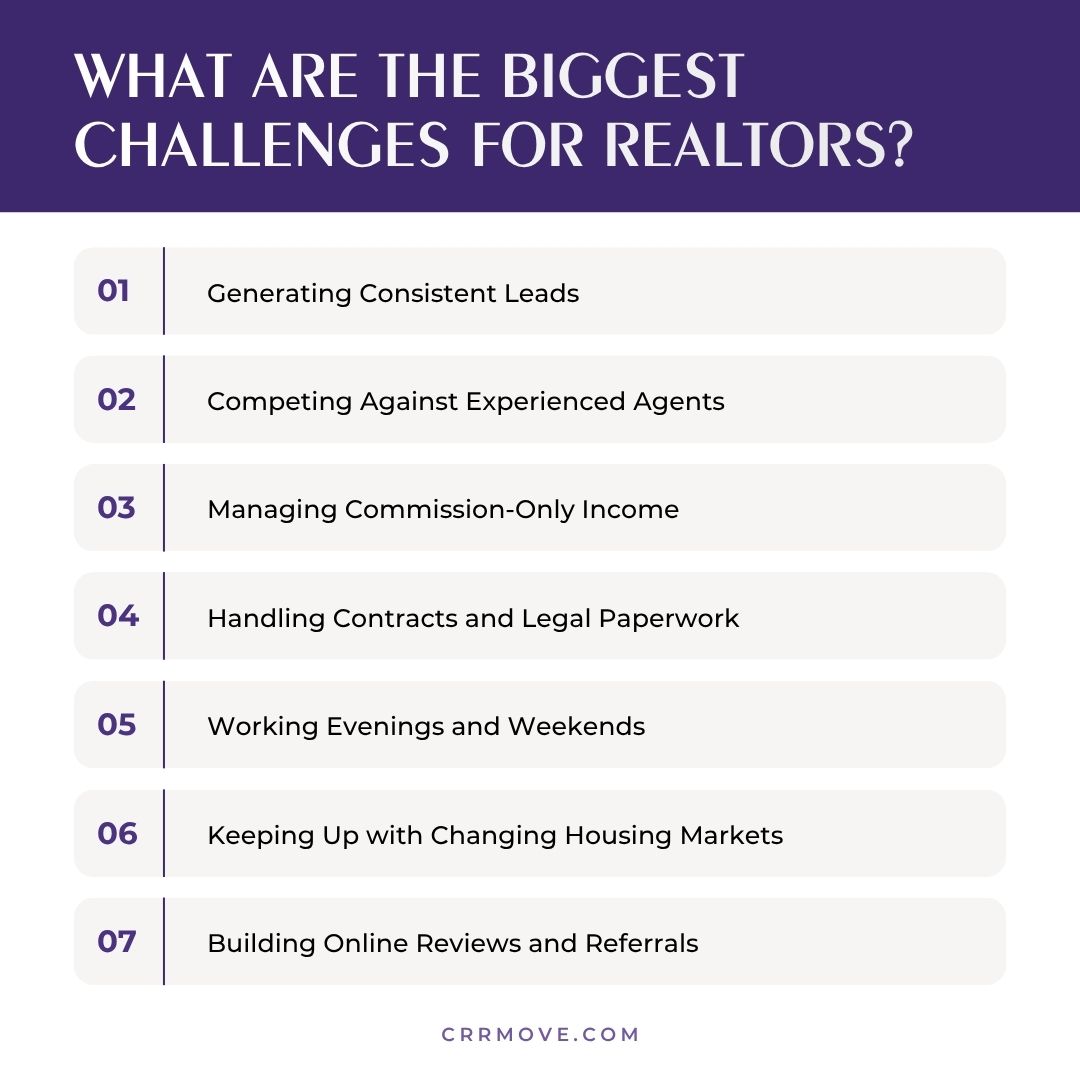
What Are the Biggest Challenges for Realtors?
Generating Consistent Leads
Consistent lead generation is one of the most demanding aspects of building a real estate business. Putting yourself in front of potential buyers and sellers regularly requires discipline and a willingness to be proactive. This isn’t something you do only when business is slow; it is a permanent part of how you operate.
The agents who sustain momentum over time treat lead generation as a non-negotiable daily habit. Cold calling, door knocking, community involvement, and a consistent social media presence are all effective approaches. The most successful agents typically combine several of these rather than relying on any single channel.
For a structured look at building your lead generation strategy, review our guide “Real Estate Lead Generation Ideas.”
See this guide to learn how to get leads as a real estate agent.
Competing Against Experienced Agents
Many buyers and sellers naturally gravitate toward agents with a proven track record. However, this creates an early challenge for newly licensed Realtors. You build experience through working with clients, but clients often want evidence of experience before committing. It can feel like a difficult loop to break.
The way through it is positioning. New agents who can clearly articulate their process, demonstrate local market knowledge, and communicate their commitment to the client’s interests compete effectively. Experience matters, but it is not the only factor clients consider when deciding whom to trust with this decision.
Managing Commission-Only Income
Real estate offers unlimited income potential, but that income is commission-based and can fluctuate from month to month. There is no guaranteed paycheck. Instead, agents receive compensation when transactions close, not for the time and effort invested along the way.
On average, agents earn approximately 2.5% to 3% of a home’s sale price per transaction. At traditional brokerages, a commission split further reduces that figure. They typically retain between 20% and 40% of the agent’s earned commission.
At Charles Rutenberg Realty Orlando, that split does not exist. Our agents keep 100% of their commission, paying only flat fees for administrative support, transaction processing, and E&O insurance. The rest stays where it belongs—with the agent.
For a full breakdown of how Realtor income works, review our guide “How Do Realtors Get Paid?”
Handling Contracts and Legal Paperwork
Real estate transactions involve a significant amount of legal documentation. Unsurprisingly, Realtors are responsible for understanding every document they present to a client. Listing agreements, purchase contracts, and disclosure forms all require a working knowledge that goes beyond surface-level familiarity.
The pre-licensing course covers the foundational concepts, but the deeper understanding develops through hands-on experience. Make it a priority to study the documents thoroughly, stay current on regulatory changes, and approach each transaction with diligence.
Working Evenings and Weekends
Real estate does not operate on a fixed schedule. Evenings and weekends are often when clients are available for showings and open houses. Meanwhile, Realtors spend daytime hours on lead generation, negotiations, and the operational side of running a business. For agents transitioning from traditional employment, that shift in schedule can take some time to adjust to.
The most effective Realtors commit fully to serving their clients while also establishing clear boundaries around their time. Without those boundaries, the job can consume every available hour. Deciding in advance when you are available and when you are not is not a limitation on your business. It is how you sustain one over the long term.
Keeping Up with Changing Housing Markets
The real estate market is in constant motion. Interest rate changes, inventory shifts, and evolving buyer and seller behavior require agents to stay informed and adjust their approach. Understanding whether the market favors buyers or sellers is foundational knowledge. Agents then use this knowledge for pricing strategy and negotiation.
Moreover, agents who track market conditions closely advise clients accurately. They can adapt their business strategy before circumstances force them to do so, putting them ahead of other agents.
Want to learn more about building a business that performs across different market conditions? Review our guide “How to Be a Successful Realtor in Any Market.”
Building Online Reviews and Referrals
Referrals represent one of the most powerful and sustainable sources of business for real estate professionals. To demonstrate this, approximately 82% of all transactions originate from referral relationships. It requires a deliberate strategy to stay connected with past clients, earn positive reviews, and encourage warm introductions. Ultimately, it is one of the highest-return investments agents make in their business.
Do you want a closer look at how client testimonials strengthen your brand and support long-term growth? Review our guide “How to Use Client Testimonials to Enhance Realtor Brand.”
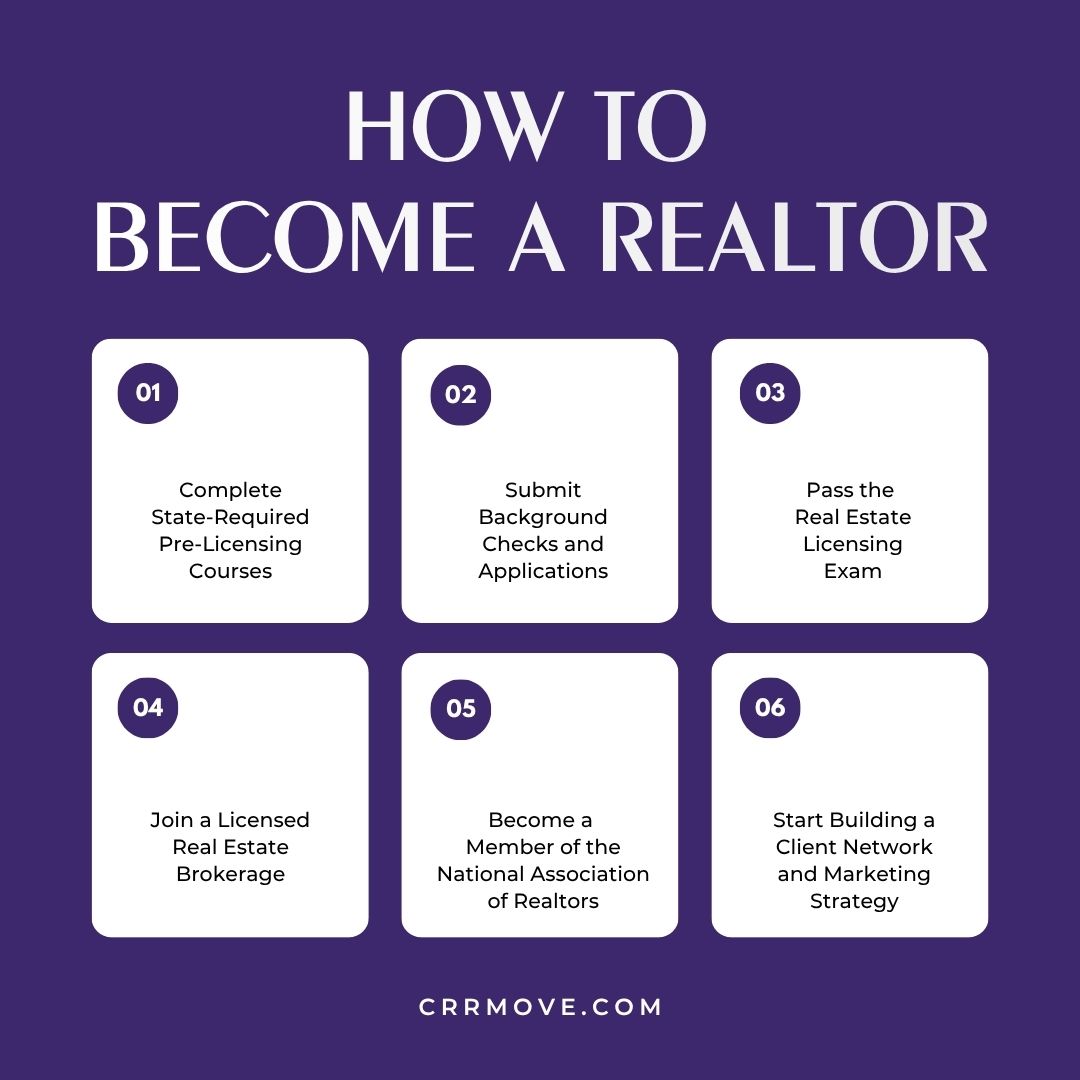
How to Become a Realtor
Complete State-Required Pre-Licensing Courses
The first step toward becoming a Realtor is completing a state-approved pre-licensing course. Requirements vary by state. In Florida, for example, prospective agents must complete a 63-hour course through an approved real estate school. These courses are available online or in person, giving candidates the flexibility to suit their schedules and budgets.
Are you looking for a full breakdown of what to expect financially throughout the licensing process? We have the answer in our guide “How Much Does It Cost to Get a Realtor License?”
Submit Background Checks and Applications
Florida requires all real estate license applicants to submit a background check and digital fingerprinting. Once you submit the background check, you can file your real estate salesperson application with the Florida Department of Business & Professional Regulation (DBPR). You must receive approval of your application before you can schedule and sit for the state licensing exam.
Pass the Real Estate Licensing Exam
Once you receive approval for your application, you may schedule your state licensing exam. In Florida, you can do so through Pearson VUE. The exam consists of 100 multiple-choice questions and takes three and a half hours to complete. You will need a minimum score of 75% to pass the exam, and results will be posted immediately upon completion.
If you do not pass on the first attempt, you may reschedule and retake the exam as needed.
Join a Licensed Real Estate Brokerage
Before you can legally begin practicing real estate, you must affiliate with a licensed broker. This affiliation is what allows you to represent buyers and sellers in transactions. However, choosing the right brokerage is one of the most consequential decisions you will make at the start of your career.
The right broker provides more than a license activation. They offer the resources, training, and professional support that help new agents build momentum from day one. For guidance on evaluating your options, review our guide about real estate recruiting.
Become a Member of the National Association of Realtors
To use the Realtor designation professionally, you must become a member of the National Association of Realtors (NAR). Some brokerages require this membership as a condition of affiliation. Others leave the decision to the individual agent. At Charles Rutenberg Realty, that choice is yours.
NAR membership provides access to essential tools, including the MLS, as well as professional development resources and networking opportunities. The Realtor designation also carries meaningful recognition with buyers and sellers. This can directly contribute to client confidence and help you stand out in a competitive market.
Start Building a Client Network and Marketing Strategy
The licensing process is behind you. Now the real work begins—building a client pipeline, developing a marketing strategy, and establishing your business. The challenges ahead are real, but you are now aware of them and better prepared to navigate them with intention.
Become a Realtor in Florida and keep 100% of your commission with Charles Rutenberg Realty.
Becoming a Realtor opens the door to genuine career freedom and unlimited income potential. The path to licensure is accessible, but building a sustainable business after licensure requires preparation and persistence. Additionally, you need a clear understanding of the challenges that come with the territory. Agents who enter the industry with realistic expectations fare better than those who discover the realities after the fact.
If you are ready to take that step, Charles Rutenberg Realty is worth a serious conversation. Our 100% commission model means you keep more of what you earn from day one. Moreover, it is the professional support, practical resources, and administrative assistance that our agents rely on just as much.
Schedule a call with our broker today to discuss what building your real estate career with us could look like.