



Ask real estate agents how they spend their weekends, and you will often hear the same answer: hosting open houses. Opening the doors of a listing to prospective buyers—without requiring a private appointment—is one of the most effective lead-generation strategies.
However, a successful open house involves far more than selecting a date and placing a sign in the yard. It requires intentional marketing, thoughtful staging, and a follow-up funnel that converts visitors into active clients.
Whether you are newly licensed or refining your strategy, understanding how to prepare and execute an open house can elevate your results. In this guide, we will outline how to prepare for an open house strategically. By the end, you’ll know how to use open houses intentionally, turning time on-site into meaningful business growth.
How to Prepare for an Open House as a Realtor
The way you prepare for an open house directly influences its outcome. When you approach the event with a clear marketing strategy and present the property thoughtfully, you shape buyer perception from the moment they walk in. Remember, even highly desirable properties can underperform if the open house is poorly planned.
As you refine your open house process, you are also strengthening your professional reputation. Sellers notice the effort, organization, and attention to detail. When they see measurable results, they are more likely to refer you and speak positively about their experience. And, in turn, this creates a steady pipeline of future clients.
In this guide, you will find a clear framework for preparing and hosting an open house the right way. Each event turns into a strategic opportunity to grow your business while drawing attention to your listing.
What Is an Open House in Real Estate?
An open house is a scheduled public showing that allows prospective buyers to tour a property without a private appointment. It also gives them a chance to interact directly with the listing agent to ask questions about the property and neighborhood. These events are typically held on weekends, making it convenient for buyers to attend open houses during their free time.
For Realtors, an open house serves a broader purpose than simply generating offers. It is a strategic lead-generation opportunity. Face-to-face conversations with potential buyers help you build rapport and develop relationships that turn interested prospects into long-term clients.
To fully understand how open houses work in real estate, our guide “How Long After an Open House Do Offers Come In?” can help set your expectations.
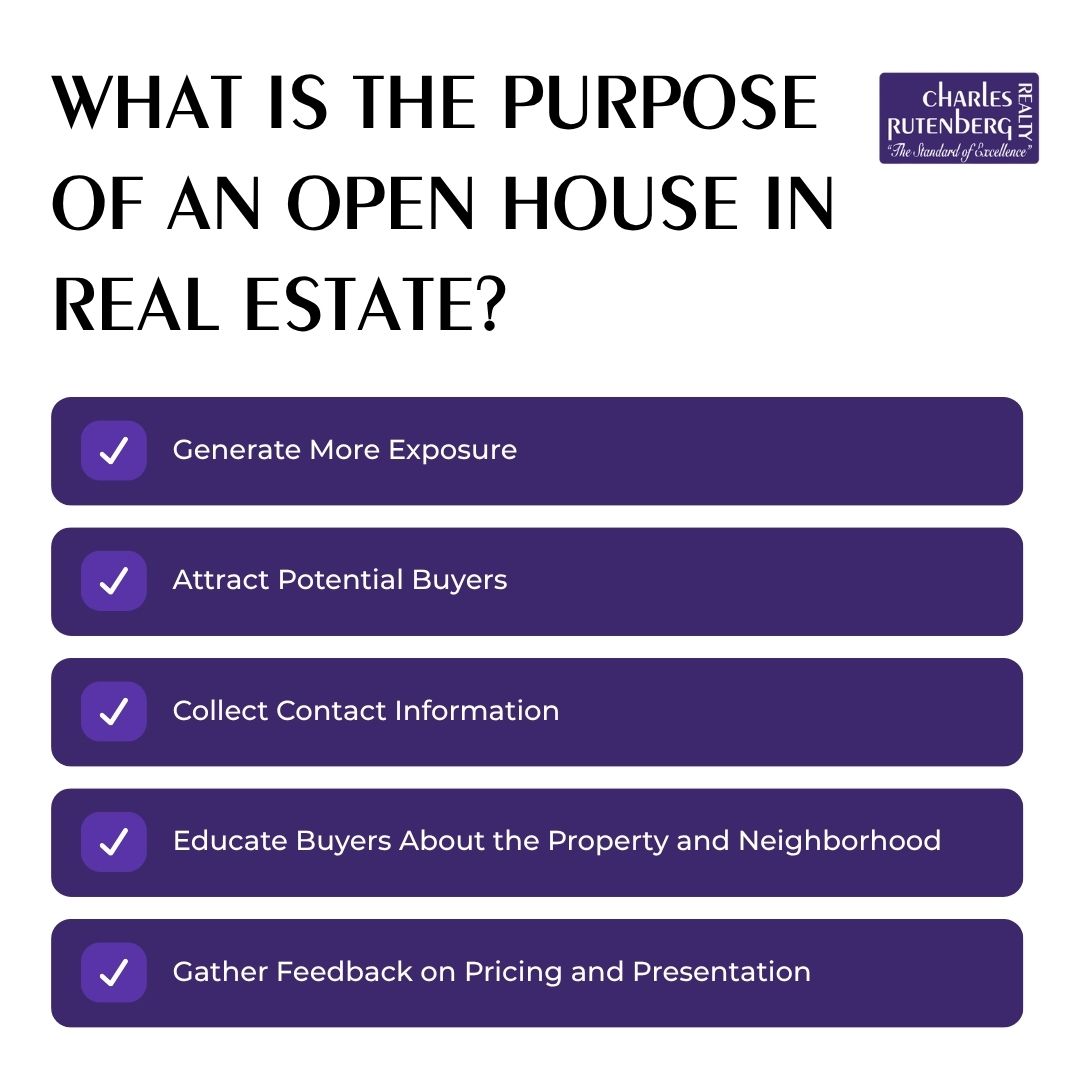
What Is the Purpose of an Open House in Real Estate?
Generate More Exposure
While 97% of buyers begin their home search online, open houses still play a meaningful role in the purchasing journey. For some, walking through a property in person is what turns casual interest into a serious offer.
It is not only buyers who pay attention to open houses, though. Nearby homeowners notice when a property in their neighborhood hits the market—and when it draws traffic. That visibility can spark conversations about home value and future plans to sell.
For Realtors, an open house is both a marketing event and a positioning opportunity. It generates exposure for the listing while simultaneously showcasing your professionalism and ability to attract interest. While buyers see a home they may want to purchase, neighbors see an agent actively building business visibility and demand.
Attract Potential Buyers
Open houses provide a low-barrier opportunity for prospective buyers to tour a property without scheduling a showing. For individuals who are not yet represented by an agent, this creates a valuable opportunity for the listing agent to establish a connection.
These events tend to attract a mix of active buyers and curious market observers. The informal setting allows visitors to ask questions, gather information, and understand the property and current market conditions. When handled strategically, those conversations can evolve into ongoing client relationships and future transactions.
Collect Contact Information
According to the National Association of Realtors (NAR), only about 4% of open houses result in an immediate offer. That statistic, however, does not diminish their value.
Realtors should view open houses as relationship-building events rather than single-transaction opportunities. They allow you to collect contact information from potential buyers and connect with nearby homeowners who may consider selling in the future.
After collecting contact information from open-house leads, make sure you have a strong follow-up strategy. Learn how to streamline communication and contact organization in our guide, “Technology for Real Estate Agents to Close More Deals.”
Educate Buyers About the Property and Neighborhood
When buyers schedule a private showing, they typically tour the home alongside their own agent. At an open house, they interact directly with the listing agent, who knows the property, pricing, and surrounding neighborhood in detail.
This direct access creates a valuable opportunity for Realtors. You can answer questions in real time, clarify property features, and provide insight about the community without being filtered through another party. This immediate connection often builds confidence and credibility between you and the potential buyer.
Realtors who focus on positioning themselves as neighborhood specialists find open houses particularly strategic. When you create consistent visibility and provide knowledgeable conversation, you become recognized and trusted within the community.
Is your long-term strategy to dominate a specific area? Our guide “How to Become a Local Real Estate Market Expert” outlines practical steps to establish yourself as the trusted authority in your market.
Gather Feedback on Pricing and Presentation
Open houses offer a distinct advantage to listing agents: real-time feedback. They provide insight into how buyers perceive the property’s pricing, condition, and overall presentation.
Unlike digital listings, where impressions remain anonymous, in-person conversations allow you to gauge reactions immediately. Are buyers responding positively to the layout? Do they question the pricing? Is the neighborhood a selling point or a concern?
This type of feedback is highly valuable to agents. It enables you to refine your marketing strategy, adjust positioning if necessary, and provide informed recommendations to your seller.
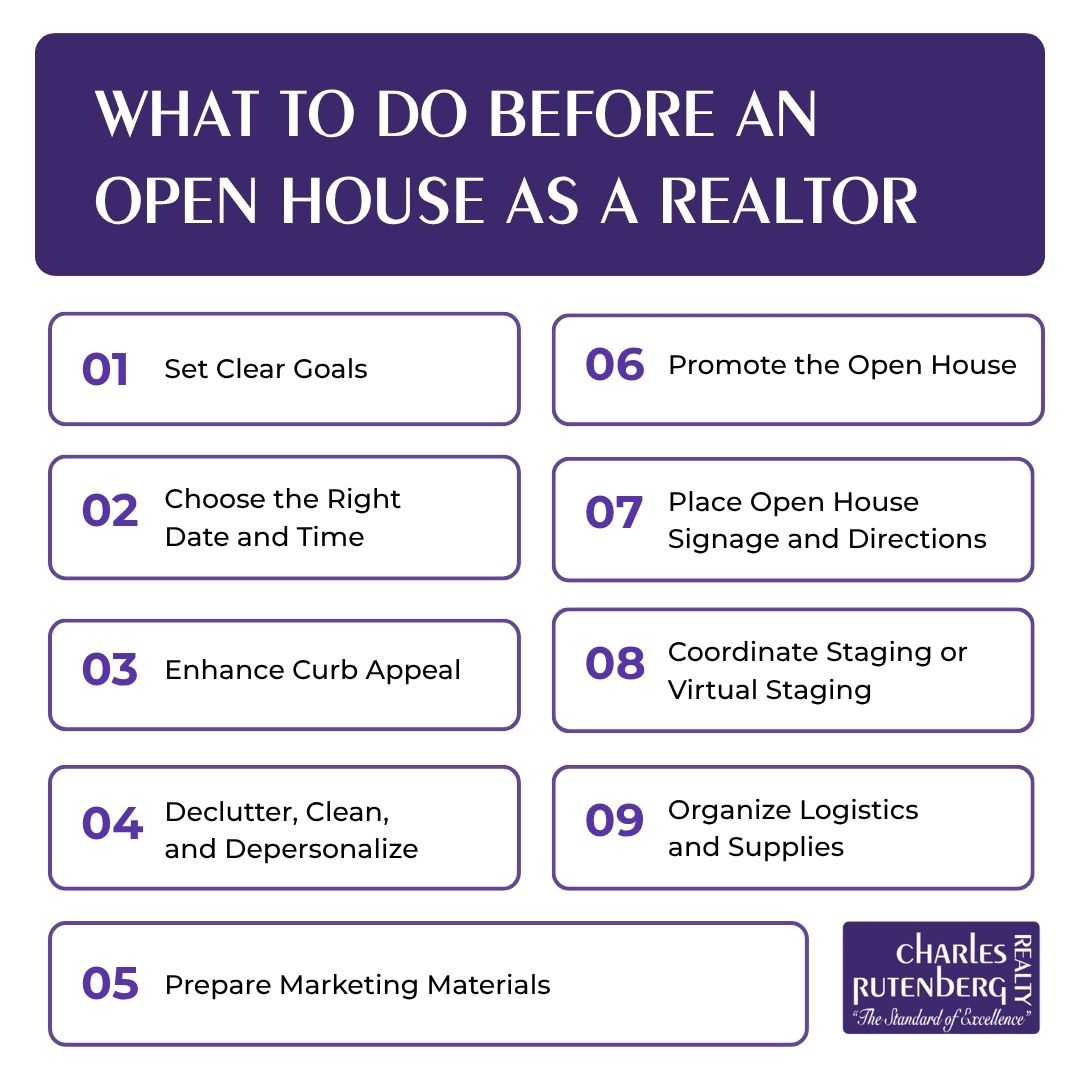
What to Do Before an Open House as a Realtor
Set Clear Goals
Before you announce an open house, define your goals. Are you focused on generating immediate offers, building your pipeline, or gathering market feedback on a new listing? Clarity at the outset shapes everything from your marketing language and how you follow up afterward. When your goal is clear, your strategy becomes intentional rather than reactive.
It is equally important to align expectations with your seller. If their expectation is an immediate offer, but your primary goal is exposure, disappointment can follow. Transparent communication protects the relationship and positions you as a strategic advisor.
If your goal is to drive offers, we recommend reviewing our guide “What Percentage of Homes Sell from an Open House?” It provides helpful context on what open houses realistically deliver and how to measure success appropriately.
Choose the Right Date and Time
Many assume open houses should always take place on Saturday or Sunday mornings. While weekends remain the standard, data often shows peak traffic on Sunday afternoons. That said, relying on assumptions instead of local insight can limit results.
Strong agents pay attention to market behavior. During football season in Florida, for example, a Saturday morning event may outperform a Sunday afternoon. Attendance also tends to decline around major holidays such as Thanksgiving and Christmas.
Additionally, some agents are becoming more strategic with scheduling. “Happy Hour” open houses after work can attract young professionals. A neighbors-only preview can strengthen geographic farming efforts and uncover future listings.
The key is alignment. Let your goal and your local market data guide your decision. When timing is intentional, your open house becomes a strategic business move, not just a calendar event.
Enhance Curb Appeal
Enhancing curb appeal can significantly impact perceived value. According to the NAR, strategic exterior improvements can increase a home’s value by $20,000 or more. Simple upgrades, such as a trimmed lawn, potted plants with fresh flowers, and a newly painted front door, can elevate your open house presentation.
Ultimately, this is essential, as first impressions shape buyer perception. When prospective buyers drive by and see a well-maintained exterior paired with an open house sign, curiosity increases. More importantly, perceived value rises before they ever step inside.
Have a direct conversation with your seller about this strategy. Help them understand that modest exterior investments can create a stronger emotional appeal and a more competitive sale outcome.
Declutter, Clean, and Depersonalize
Before opening the doors to prospective buyers, ensure the home has been professionally deep-cleaned. A spotless property communicates care and attention to detail. Buyers can focus on the home’s features—not minor distractions like dust, odors, or clutter.
You should also advise your seller to depersonalize the space. Remove family photographs, personal collections, and decor that could be viewed as overly niche or controversial. The objective is simple. Buyers should be able to envision their life in the home, not feel as though they are walking through someone else’s.
Prepare Marketing Materials
When prospective buyers attend your open house, they should leave with more than a handshake. They should leave informed.
Well-prepared marketing materials, such as property fact sheets, financing options, and neighborhood highlights, reinforce the value of the home and community. A professionally designed brochure featuring high-quality photos and key details, for example, keeps the property top of mind long after the event ends. It also gives buyers something tangible to review before deciding to schedule a private showing or submit an offer.
Ensure that every piece of marketing material reflects your Realtor branding and includes clear contact information. Open houses generate exposure, but thoughtful follow-up materials convert interest into opportunity.
Promote the Open House
One of the more challenging aspects of hosting a successful open house is promotion. Most agents rely on traditional methods such as listing the event on the MLS, sending email announcements to their network, and running targeted ads. These strategies remain effective and should be part of your baseline approach.
However, social media offers a powerful way to expand your reach beyond your existing network. Creating geo-targeted posts or event ads on Facebook and Instagram allows you to reach active buyers in the area. More specifically, you can showcase property highlights, share event details, and build anticipation before doors even open.
If you want to elevate your digital marketing strategy, review our guide “Social Media for Realtors.” It offers a structured approach to effectively using these platforms to grow your business.
Place Open House Signage and Directions
While digital promotion drives awareness, grassroots marketing remains an important factor in open house success. Strategic signage can capture attention from buyers already in the area.
Place open house and directional signs at nearby cross streets, neighborhood entrances, and major intersections leading to the property. Clear visibility and logical placement make it easy for traffic to follow the path directly to the home.
Your signage should always include professional branding and essential property details. This reinforces your presence in the market and helps pre-qualify visitors. Moreover, when buyers understand the price point and key features before arriving, the traffic you receive is more intentional.
For a deeper breakdown of placement strategy and compliance considerations, review our guide, ”Open House Signs for Realtors.”
Coordinate Staging or Virtual Staging
Thoughtful furniture placement can significantly influence how buyers view a property. When clients or Realtors intentionally stage a home, it highlights space, flow, and functionality. In many cases, professional staging can increase the property’s value by up to 10% while also reducing days on market.
Effective staging does not have to be complicated. Staging tips include removing excess clutter, incorporating neutral color palettes, and arranging furniture to create open, natural pathways. The goal is to make each room feel intentional and spacious.
If traditional staging is not feasible, virtual staging is a strong alternative. Digital rendering tools allow you to showcase furnished versions of vacant or outdated spaces to potential buyers. As a result, buyers can visualize the space’s potential rather than focus on what’s missing.
Whether physical or virtual, staging helps you control the narrative of a home and ultimately positions the listing more competitively in the market.
Organize Logistics and Supplies
One or two days before the open house, shift your focus to execution. Preparation at this stage ensures the event feels polished and seamless.
Begin by organizing all printed materials. Have your property flyers, neighborhood data sheets, and branded brochures arranged and ready to distribute. Confirm that your sign-in process is set up—whether that’s a sign-in sheet or a digital registration form on a tablet connected to your CRM.
If you plan to offer refreshments, prepare them in advance. Water, lemonade, or light refreshments should be chilled and presented neatly. Small details like cups, napkins, and trash receptacles matter more than most agents realize.
Finally, walk through the event in your mind. Consider what visitors will see first, how you will greet them, and how you will guide the conversation. Anticipating the flow of the open house allows you to identify any gaps before they become issues.
When you handle logistics in advance, you are free to focus on what truly matters—building relationships and converting opportunities.
For additional information, see our guide “How to Host an Open House” that produces results.
Host more open houses with Charles Rutenberg Realty and keep 100% of your commission.
Hosting successful open houses does not have to feel overwhelming or unproductive. When you approach each event with a clear strategy and preparation, open houses become powerful tools. Whether your objective is to generate competitive offers or build a strong client pipeline, preparation determines performance.
At Charles Rutenberg Realty Orlando, we equip our agents with the systems, reputation, and tools needed to host open houses that produce measurable results. Our brand recognition in the market, combined with practical agent support, positions you to present listings confidently and convert opportunities.
And when those efforts result in an offer, you keep 100% of your commission. No brokerage splits. Ever.
Are you ready to elevate how you operate and retain more of what you earn? Schedule a conversation with Charles Rutenberg Realty today.