



A good commission split in real estate isn’t always the highest percentage an agent can find. The right commission structure depends on what you actually receive in return and how the total costs affect your take-home income.
As you evaluate a brokerage model, there are several factors worth weighing before you sign anything. Because, ultimately, the percentage on paper doesn’t always reflect the full financial picture. This is a practical guide to understanding real estate commission splits, comparing brokerage options, and deciding what fits the business you’re building here in Central Florida.
At Charles Rutenberg Realty, we work with real estate professionals every day who are re-thinking how their compensation is structured. We built this guide so you can make a well-informed decision, whether you’re new to the field or a seasoned agent ready for a change.

What Is a Good Commission Split in Real Estate?
One of the most frequently asked questions among agents is: “What truly is a good commission split?” Ultimately, there’s no single commission split that’s best for every real estate agent, so the goal is finding the arrangement that returns the most value for your specific business. When you evaluate a commission split, look past the raw percentage and study the whole package: the fees you’ll pay, the technology you’ll access, the training and administrative support you’ll lean on, and the leads (if any) you’ll receive.
A lower split can sometimes offer more value than a higher one, and a higher split can cost you more once the fees are added up. If a brokerage advertises attractive commission rates but layers on a monthly desk fee, transaction charges, and franchise fees, your real earnings can shrink quickly.
If you’re weighing whether the numbers add up to a career worth pursuing, our post, “Is Real Estate a Good Career?”, offers useful context. The point is simple: compare the total, not the headline.
What Is a Commission Split in Real Estate?
A real estate commission split is the way the commission earned on a transaction is divided between the brokerage and the real estate agent. When a home sells, the seller typically pays a total commission that’s shared among the parties involved, and the agent’s brokerage receives a portion of that amount.
It helps to keep three numbers separate. First, there’s the total commission paid in the transaction, which is the full amount tied to the sale. Second, there’s the portion routed to the real estate broker or brokerage. Third, there’s the portion the agent receives after the brokerage takes its share. That final number, the amount the agent receives, is what most people refer to when they talk about how commission splits work.
For a deeper look at the underlying math, our guide, “How Much Is Realtor Commission?”, breaks it down further.
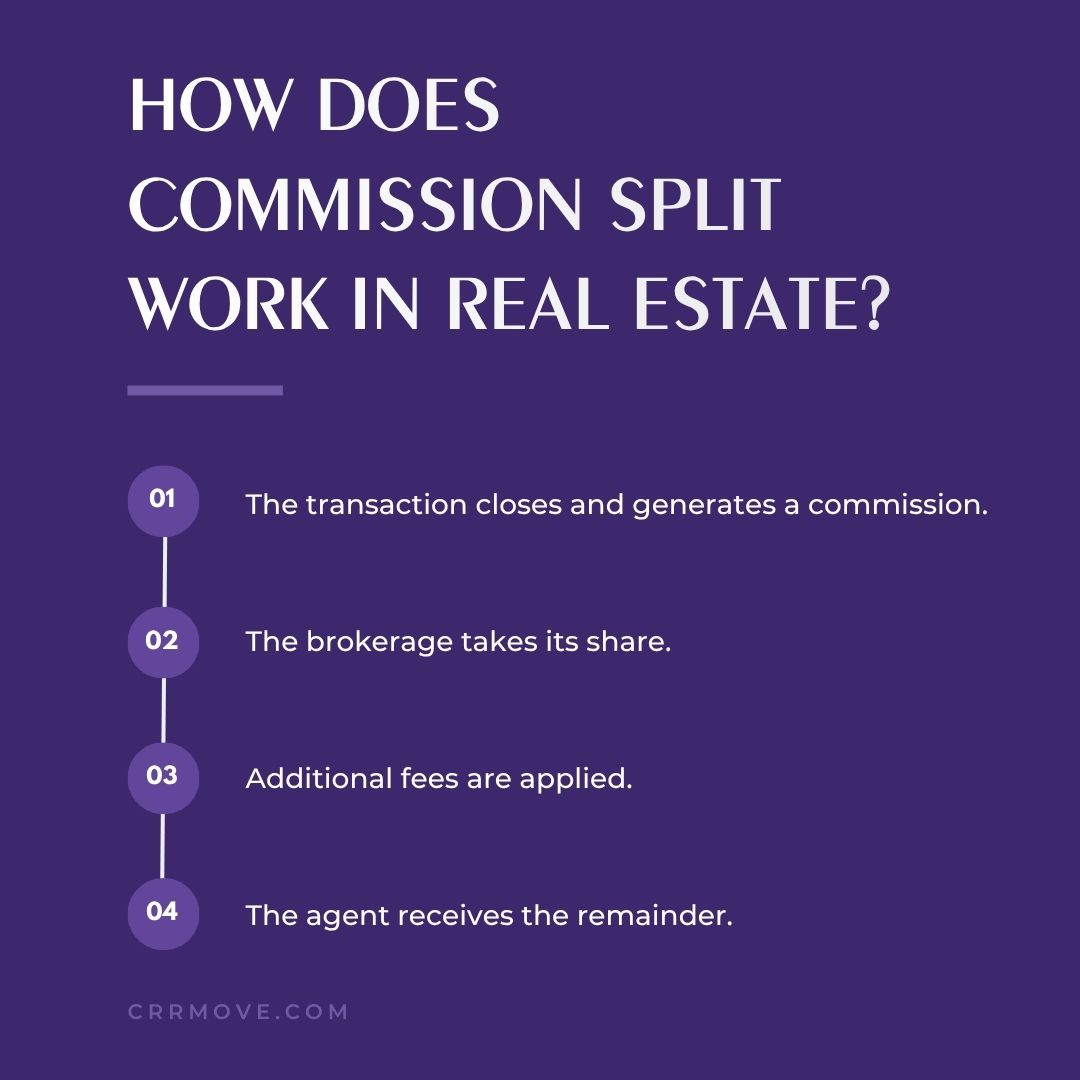
How Does Commission Split Work in Real Estate?
When analyzing finances, it helps to walk through commission splits step by step, from a completed transaction to the amount the agent actually keeps. Here’s how commission splits work in practice under a traditional brokerage model:
The transaction closes and generates a commission.
A property sells, and the transaction generates the total commission tied to that sale. This is the starting pool before anyone’s share is calculated, and every downstream number flows from it.
The brokerage takes its share.
Under a traditional split, the brokerage receives its agreed portion of the commission. This is where a figure like a 70/30 split comes in, meaning the agent keeps one portion while the brokerage keeps the rest. The specific percentage varies by real estate company and by the agreement you sign.
Additional fees are applied.
Depending on the brokerage model, an agent pays certain costs on top of the split, such as a monthly desk fee, transaction fees, or franchise fees. These deductions reduce what’s left, so two brokerages advertising identical commission rates can leave you with very different amounts.
The agent receives the remainder.
After the split and the fees, the agent receives the balance. This is the number that matters most, and it’s why comparing the full commission structure beats comparing percentages alone.
Do Real Estate Agents Have to Split Commission?
Not always. Whether an agent splits commissions depends entirely on the brokerage relationship and the agreement in place. Many traditional brokerages divide the commission with their agents, while others, including Charles Rutenberg Realty, are built on a 100% Commission model with low fees and no brokerage split.
Because your compensation arrangement is defined by your contract, you should review the terms of any brokerage agreement carefully, along with any applicable rules, before you make a decision. We don’t offer legal, tax, or financial advice, so it’s wise to consult a qualified professional about how a given arrangement affects your specific situation. Reading the fine print now protects the income you work hard to earn later.
What Is a Fair Commission Split in Real Estate?
A fair commission split is one where the overall value of the arrangement matches what you give up. From an agent’s perspective, fairness isn’t measured by percentage alone but by the total support, tools, and costs bundled into the deal. Two agents on identical splits can have completely different experiences depending on what their brokerage provides.
The Percentage, Cap, and Fees
Start with the numbers you can measure. Look at the split percentage, whether the brokerage uses a commission cap, and what fees apply along the way. Under a cap system, an agent shares a portion of their commission with the brokerage until they reach an annual set limit, after which they retain a larger share of the earnings.
Companies like Keller Williams built their reputation partly on this cap system, though a permanent split with a monthly desk fee can look very different by year’s end.
Training, Technology, and Support
Beyond what you earn, weigh what the brokerage delivers. Strong training, reliable technology, transaction support, and administrative help all add real value to your agent commission, especially early in your career. A brokerage that equips you to close more deals can justify its share, while one that offers little in return may not.
Leads, Marketing, and Services
Finally, consider whether the real estate company provides leads, marketing resources, and other services that grow your business. Some brokerages generate leads and take a larger cut in exchange. Others hand you full independence and expect you to build your own pipeline. Neither is wrong; what matters is that the arrangement fits how you want to work.
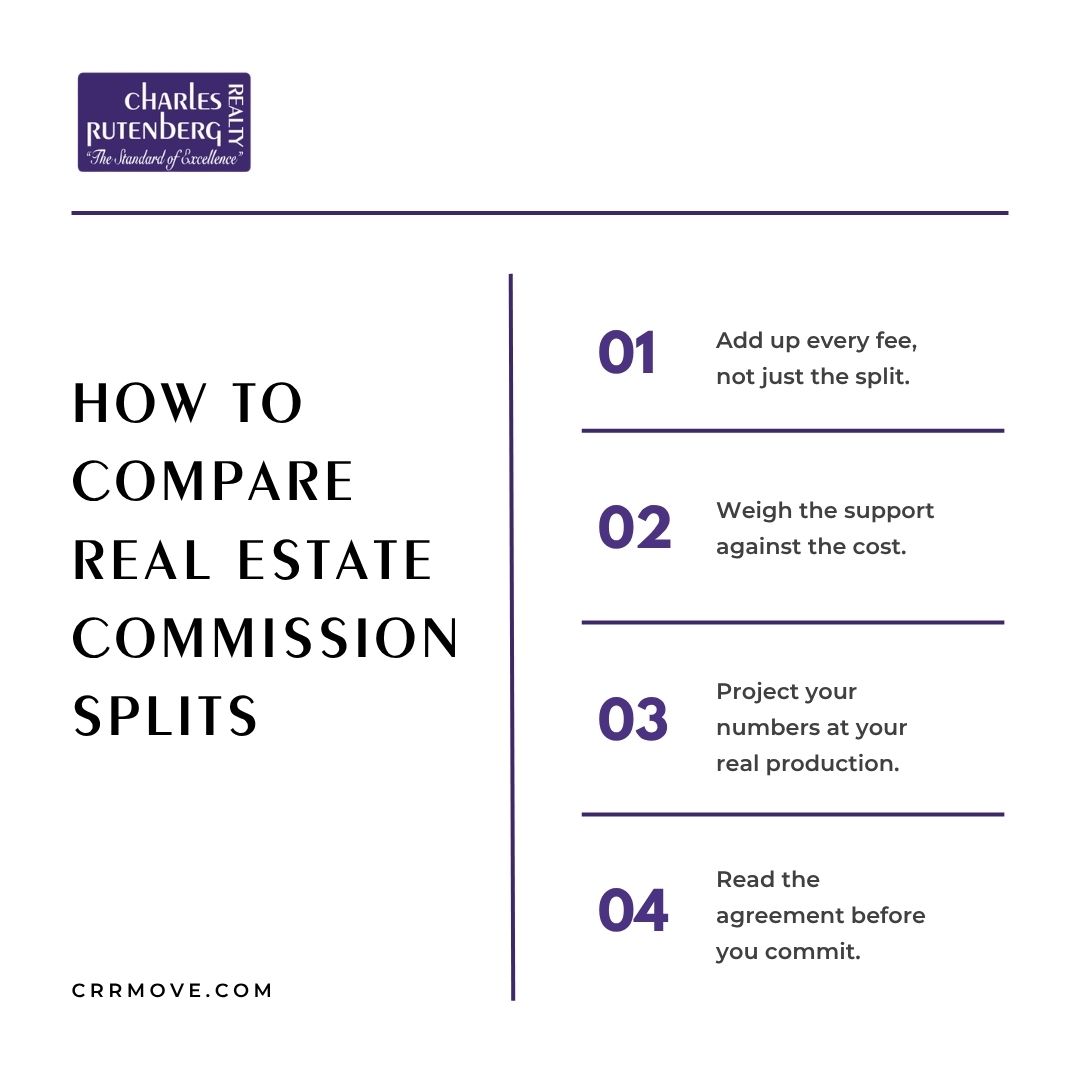
How to Compare Real Estate Commission Splits
When you line up brokerage options side by side, use a consistent method so you’re comparing value, not marketing. These tips will help you cut through the pitch and see what each real estate broker truly offers.
Add up every fee, not just the split.
Calculate your projected annual income under each brokerage model, then subtract every cost: the split, any commission cap, franchise fees, and a monthly desk fee if one applies. Real estate commissions look generous until the deductions land, so the full picture protects you from surprises.
Weigh the support against the cost.
Ask what you receive in exchange for what the brokerage keeps. Training, technology, and transaction support carry real value, and a slightly lower take-home can be worth it when the infrastructure helps you close more deals. Match the support to your experience level and your goals.
Project your numbers at your real production.
Run the math at the volume you actually expect to sell, not a best-case scenario. A cap system rewards high producers, while a flat monthly fee may suit steadier volume. If you want realistic benchmarks, explore an overview in our article, “How Much Do Realtors Make in Florida?” This information can ground your projections in local data.
Read the agreement before you commit.
Confirm every term in writing, including how and when split commissions are calculated and what happens if you change brokerages. Clear terms today prevent disputes tomorrow, and they tell you a lot about how a real estate company treats its agents.
Why the Right Brokerage Model Matters for Florida Agents
Choosing the right commission structure is one of the most important business decisions a Florida agent makes, and it shapes everything from your monthly income to how you serve clients across the Orlando and Central Florida market. This region continues to draw buyers with its theme parks, growing job market, lakeside communities, and year-round sunshine, and agents who thrive here keep more of what they earn so they can reinvest in serving that demand.
At Charles Rutenberg Realty, founded in 2000, we’ve grown into one of the largest and most respected real estate brokerages in Florida, home to 2,100+ agents. We built our agent-first model on 100% Commission, low fees, technology, training programs, marketing tools, and a collaborative environment, all designed so you keep more of what you earn while getting the support to grow. If you’re ready to see what a truly agent-centric brokerage feels like, apply to join our Florida team or explore the details on our Work With Us page and start a conversation with our broker. Additionally, whether you’re buying a home or selling a home, Charles Rutenberg Realty can help walk you through the process.
This post is for general informational purposes only and does not constitute legal, tax, or financial advice. Please consult a qualified professional regarding your specific situation.
By the Charles Rutenberg Realty Team